You wake up with a sore jaw.
Your temples are tight. Your neck aches before the day has even started.
Maybe your partner has mentioned you grind your teeth at night.
Maybe your dentist has already fitted you with a mouthguard.
But the pain keeps coming back — because a mouthguard treats the symptom, not the source.
For many people dealing with jaw pain and bruxism, the real problem isn’t in the jaw at all.
It starts in the neck, the upper back, and the muscle tension that accumulates there — often silently — over months and years.
Remedial massage in Shepparton is helping people finally address the full picture.
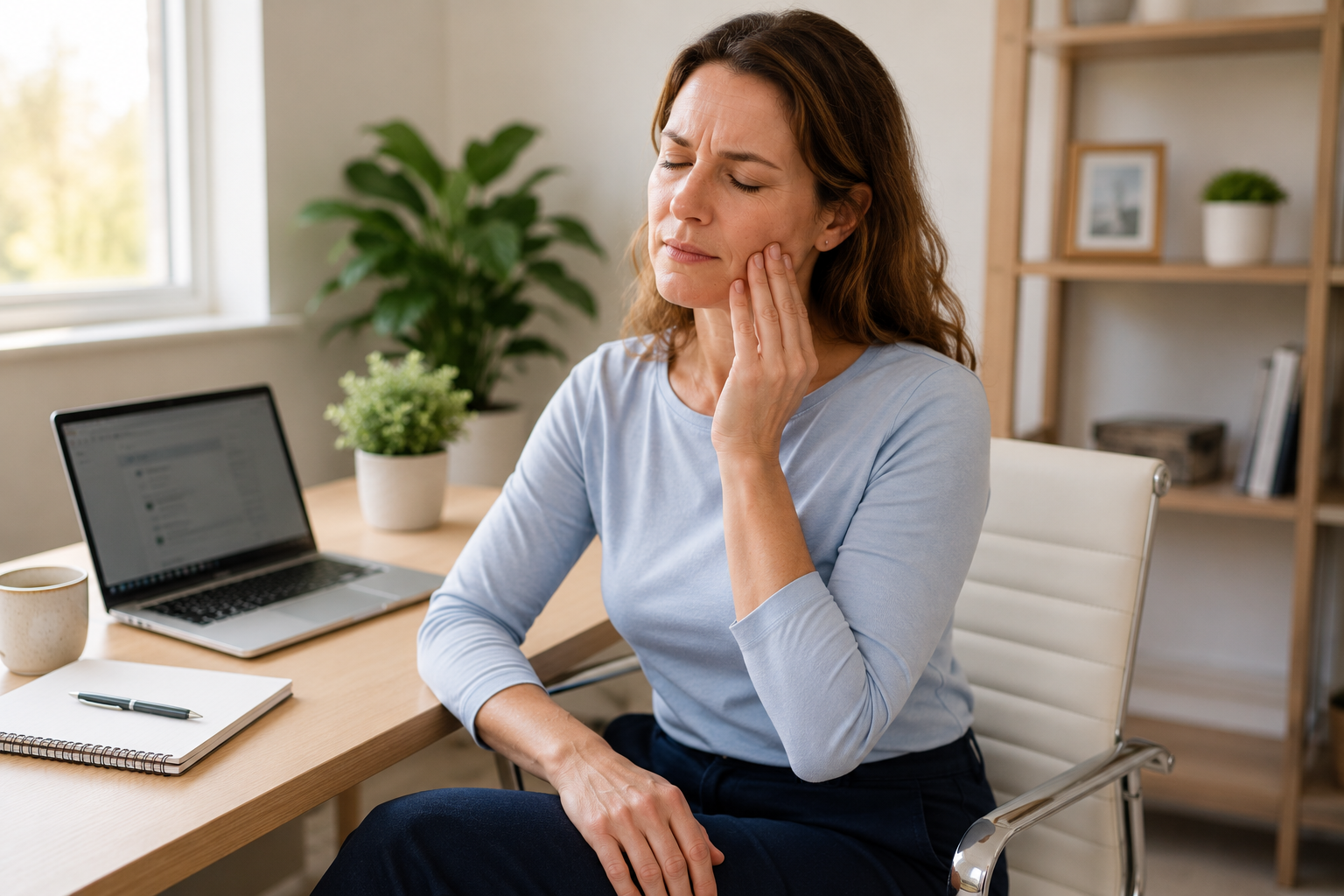
What Is TMJ Dysfunction — and Why Does It Happen?
The temporomandibular joint — or TMJ — is the hinge that connects your jaw to your skull.
It’s one of the most frequently used joints in your body.
It opens, closes, shifts side to side, and moves forward with every bite, word, and yawn.
When the muscles controlling this joint become overloaded — from stress, poor posture, or sustained clenching — the joint itself begins to suffer.
Common symptoms include:
✔ Pain or clicking at the jaw joint ✔ Difficulty opening the mouth fully ✔ Facial pain, particularly around the cheeks and temples ✔ Tension headaches that start at the base of the skull ✔ Ear discomfort or a sense of fullness without infection ✔ Neck stiffness that worsens through the day
⚠️ Many people with TMJ dysfunction don’t realise their tension headaches are jaw-related.
They treat the head. They never treat the jaw — or the neck driving it.
Why the Neck Is Almost Always Involved
Here’s what most people aren’t told.
The muscles of the jaw and the muscles of the neck share fascial connections.
They influence each other directly.
When the neck is tight — particularly the suboccipital muscles at the base of the skull and the sternocleidomastoid running along the side of the neck — that tension transmits into the jaw.
The masseter muscle (the primary jaw closer) is one of the strongest muscles in the body relative to its size.
When it’s chronically overactivated — from clenching, grinding, or sustained tension — it develops trigger points.
Those trigger points refer pain into the cheek, the temple, the ear, and even the upper teeth.
👉 Forward head posture makes this significantly worse.
When the head sits forward of the shoulders — as it does for most desk workers and screen users — the suboccipital muscles have to work constantly just to hold the head up.
That sustained effort feeds directly into jaw tension.
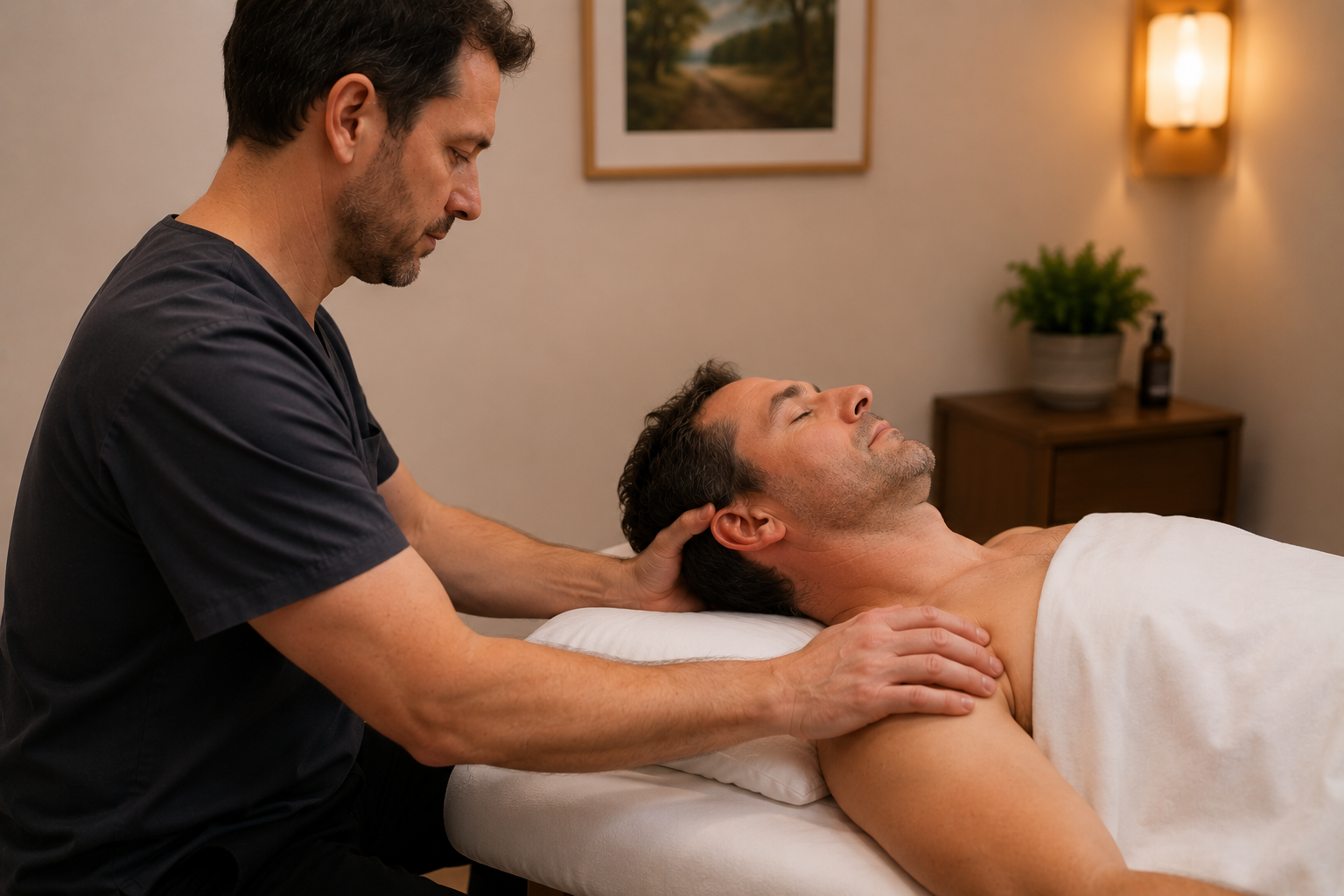
The Stress Connection — Why Bruxism Gets Worse at Night
Teeth grinding rarely happens in isolation.
It’s almost always associated with elevated stress — and the nervous system’s failure to fully downregulate before sleep.
During the day, many people clench their jaw under pressure without realising.
At work. In traffic. During difficult conversations.
By the time they go to bed, the masseter and temporalis muscles are already fatigued and hypertonic.
The nervous system, still running in sympathetic mode, continues to fire the jaw muscles through the night.
The result: bruxism.
⚠️ A mouthguard protects the teeth.
It does not relax the muscles causing the grinding.
Addressing the underlying muscular and nervous system tension is what actually changes the pattern.
How Massage Addresses Jaw Pain and Bruxism
Effective treatment works on multiple levels — not just the jaw itself.
🔹 Trigger point therapy to the masseter and temporalis — these are the two primary muscles involved in bruxism. Both develop dense trigger points under sustained clenching. Releasing them reduces jaw tension, referred facial pain, and the baseline muscle activity that drives grinding.
🔹 Suboccipital release — the four small muscles at the base of the skull are almost always involved in TMJ presentations. Releasing these reduces the referred headache pattern and removes one of the key drivers of sustained jaw tension.
🔹 Sternocleidomastoid work — this large neck muscle refers pain to the temple, face, and behind the eye when it carries trigger points. It’s a frequently missed contributor to facial pain and headache.
🔹 Deep tissue massage to the upper back and posterior shoulder — poor posture in the upper back drives forward head position, which drives neck tension, which drives jaw tension. Treating only the jaw without addressing the postural foundation produces temporary relief at best.
🔹 Indian head massage — a highly effective option for people whose jaw pain is accompanied by significant scalp tension, mental fatigue, and stress-related headaches. The technique works across the scalp, neck, and upper shoulder region — precisely the area most involved in TMJ presentations.
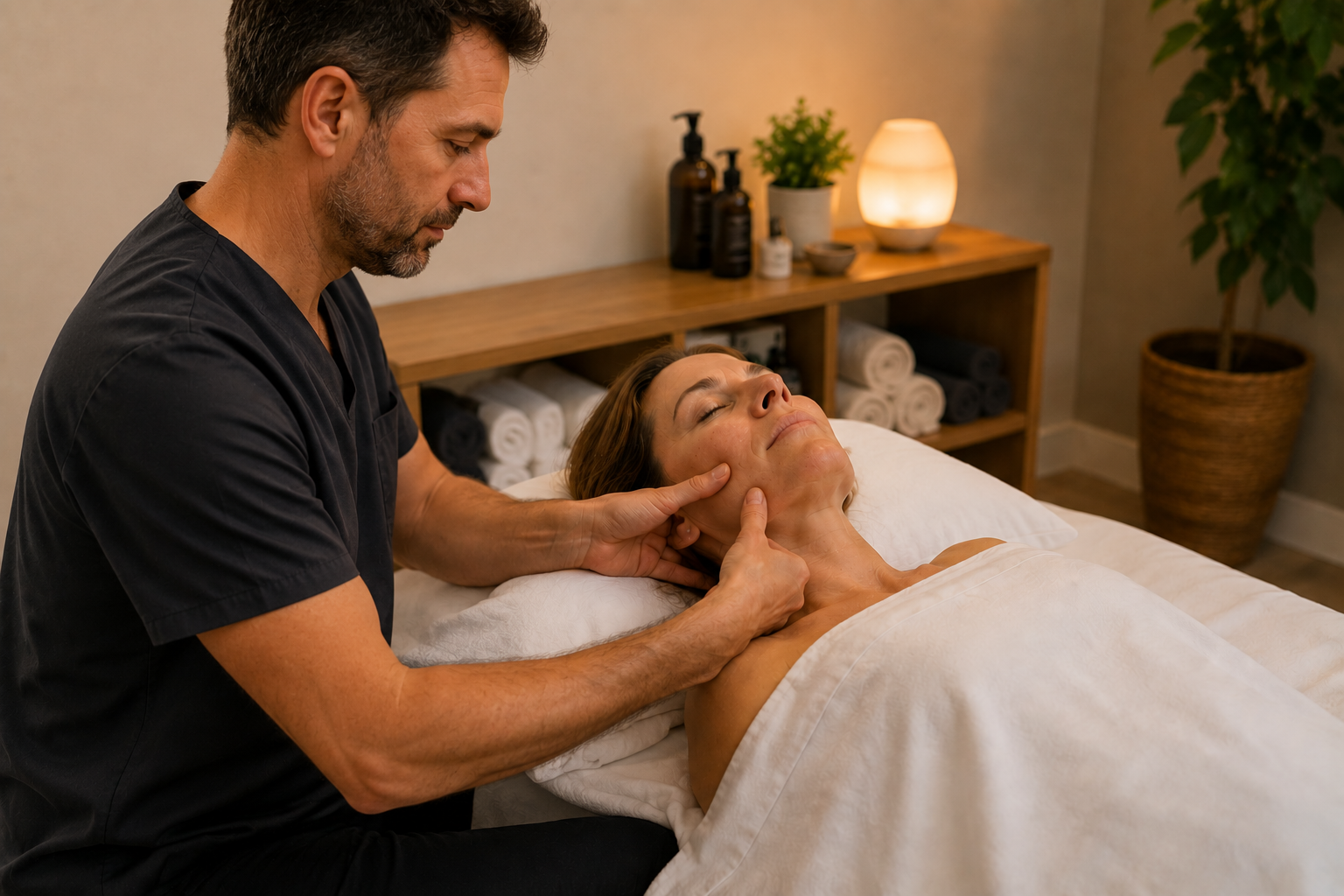
A Real Scenario: A Shepparton Teacher Clenching Through Term ThreePicture a secondary school teacher in her early forties.
She’s three weeks into a heavy teaching term.
She wakes most mornings with a jaw that aches.
Her temples are tight. She has a dull headache by mid-afternoon almost every day.
Her dentist confirmed she grinds her teeth and recommended a mouthguard.
She wears it. It helps a little — but the facial pain and headaches persist.
When she came in for treatment, assessment found significant trigger point activity in both masseters, the right temporalis, and the suboccipital region.
Her neck was stiff and her upper trapezius was bilaterally elevated — a pattern consistent with sustained stress and forward head posture from hours at a desk and whiteboard.
After three sessions targeting the jaw, neck, and upper back, her morning jaw pain had reduced substantially.
The afternoon headaches — which she’d assumed were stress headaches — had largely resolved.
She continued with fortnightly maintenance sessions through the rest of term.
For anyone in a similar pattern across Shepparton, Mooroopna, or the surrounding region — this type of presentation responds reliably well to targeted treatment.
What to Do Between Sessions
Massage creates the conditions for change.
Your habits between sessions determine how long it holds.
✔ Notice clenching during the day. Most people clench at their desk, in the car, or during stressful moments without awareness. When you notice it — release the jaw deliberately. Teeth should rest slightly apart.
✔ Reduce caffeine in the evening. Caffeine elevates cortisol and increases the likelihood of nocturnal grinding.
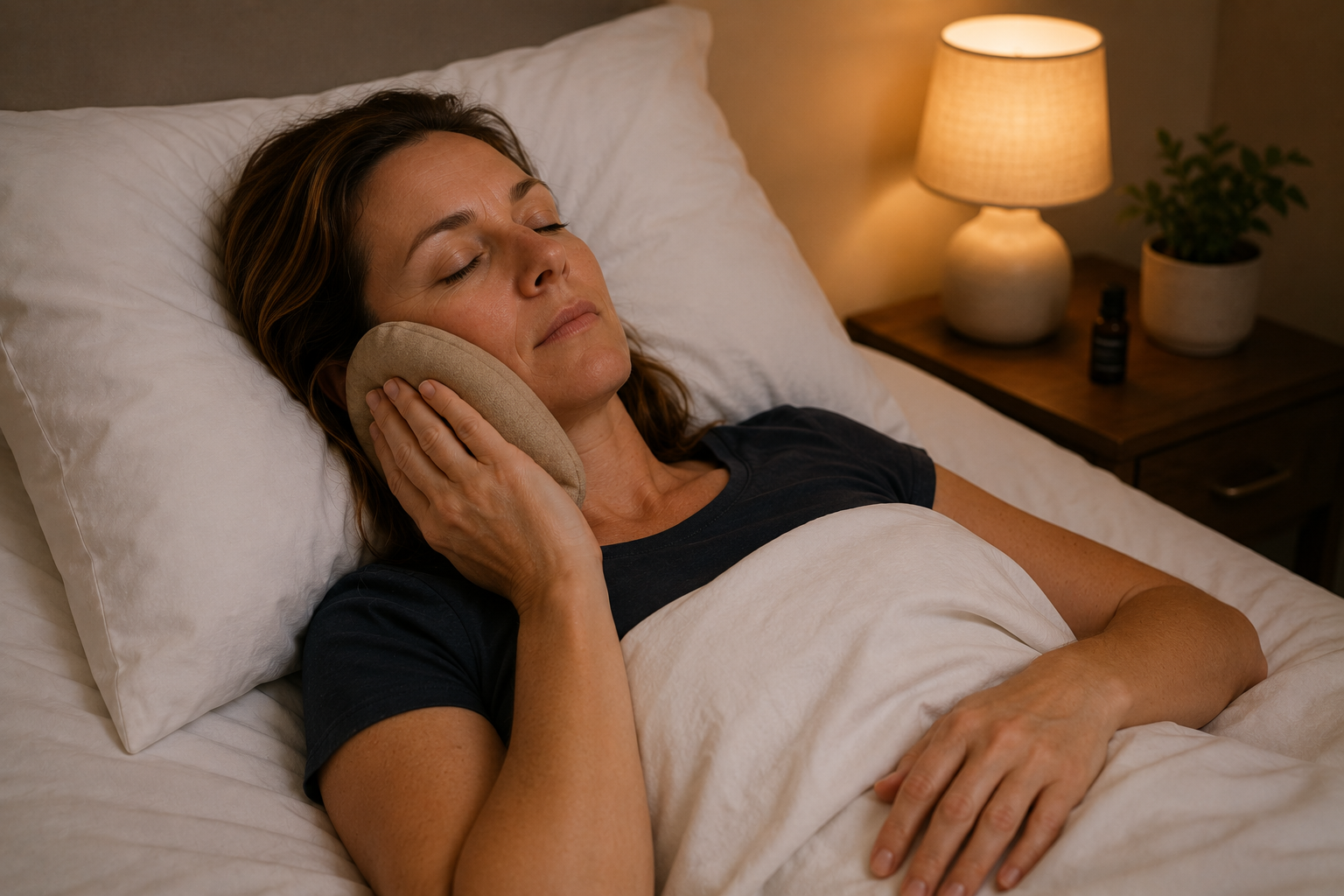
✔ Apply heat to the jaw and neck before bed. A warm pack held over the masseter for 10 minutes before sleep reduces muscle tone and supports the transition into rest.
✔ Address screen posture. If your chin is dropping toward the screen for hours daily, forward head load is rebuilding the neck tension that feeds jaw clenching.
✔ Prioritise sleep quality. A nervous system that doesn’t fully downregulate at night is one that continues to fire the jaw muscles. Massage for sleep can be a valuable addition for people whose bruxism is tightly linked to disrupted rest.
When to Seek Additional Support
Massage is highly effective for the muscular component of jaw pain and bruxism.
But it works best as part of a broader approach.
👉 If you haven’t already seen a dentist, do so. Tooth wear and bite changes from chronic grinding benefit from professional dental assessment.
👉 If jaw clicking is accompanied by locking — where the jaw gets stuck open or closed — this may indicate a structural disc issue requiring further investigation.
👉 If stress is a significant driver, addressing that at the nervous system level matters. Deep relaxation massage specifically targets the parasympathetic shift that allows the nervous system to stop bracing — including through the jaw.
Jaw Pain Doesn’t Have to Be Something You Just Live With
Jaw pain, facial tension, and teeth grinding are extremely common.
They’re also very treatable — when the right structures are addressed.
The masseter and temporalis are muscles like any other.
They hold tension. They develop trigger points. They respond to skilled hands-on treatment.
And when the neck and upper back driving that tension are also treated, the results last far longer than a mouthguard alone ever could.
Mobile massage is available throughout Shepparton, Mooroopna, Kialla, Tatura, and surrounding areas — so access to treatment is never the barrier it might seem.
👉 Explore the full range of treatments at Relaxellent and take the first step toward waking up without a jaw that aches.