

Learning Bowen from the man who helped preserve Tom Bowen’s original work
I’ve been practising the Bowen Technique for more than 30 years, but there’s something about my trainingthat I’m particularly proud of.
I learned Bowen face-to-face from Oswald “Ossie” Rentsch in Bendigo in 1993.
That matters because Ossie wasn’t simply another Bowen practitioner or instructor. He had spent yearslearning directly from Tom Bowen, the Australian practitioner whose remarkable approach to bodyworkbecame what we now know as the Bowen Technique.
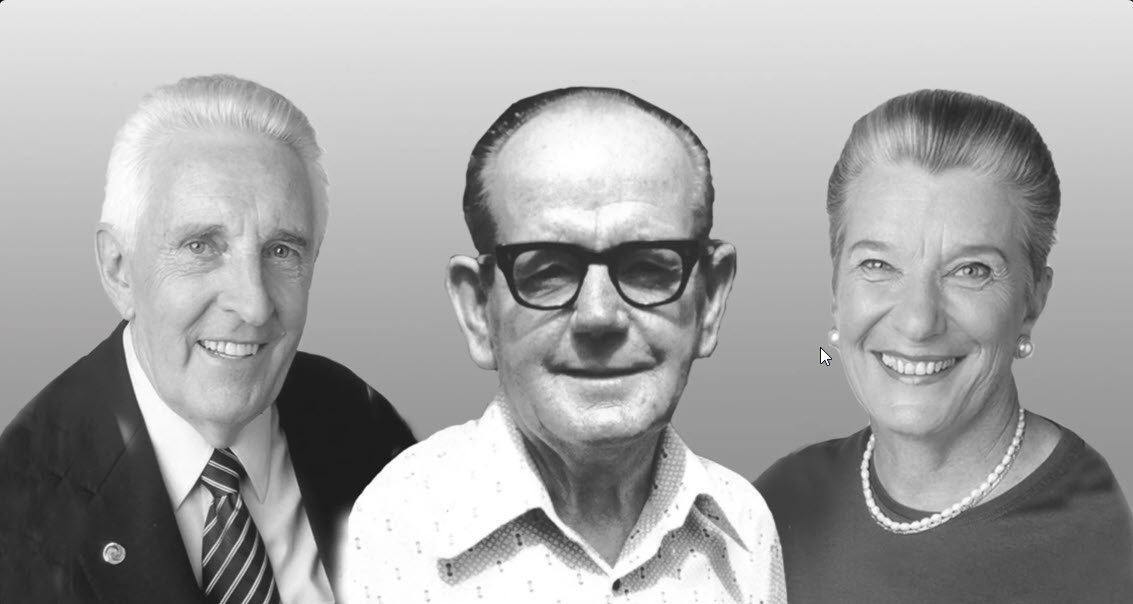
Oswald “Ossie” Rentsch, Tom Bowen and Elaine Rentsch. Rentsch studied and documented Bowen’swork, helping preserve the technique for future generations.
My training therefore has a very short line back to its beginnings:
Tom Bowen → Oswald Rentsch → my training in 1993
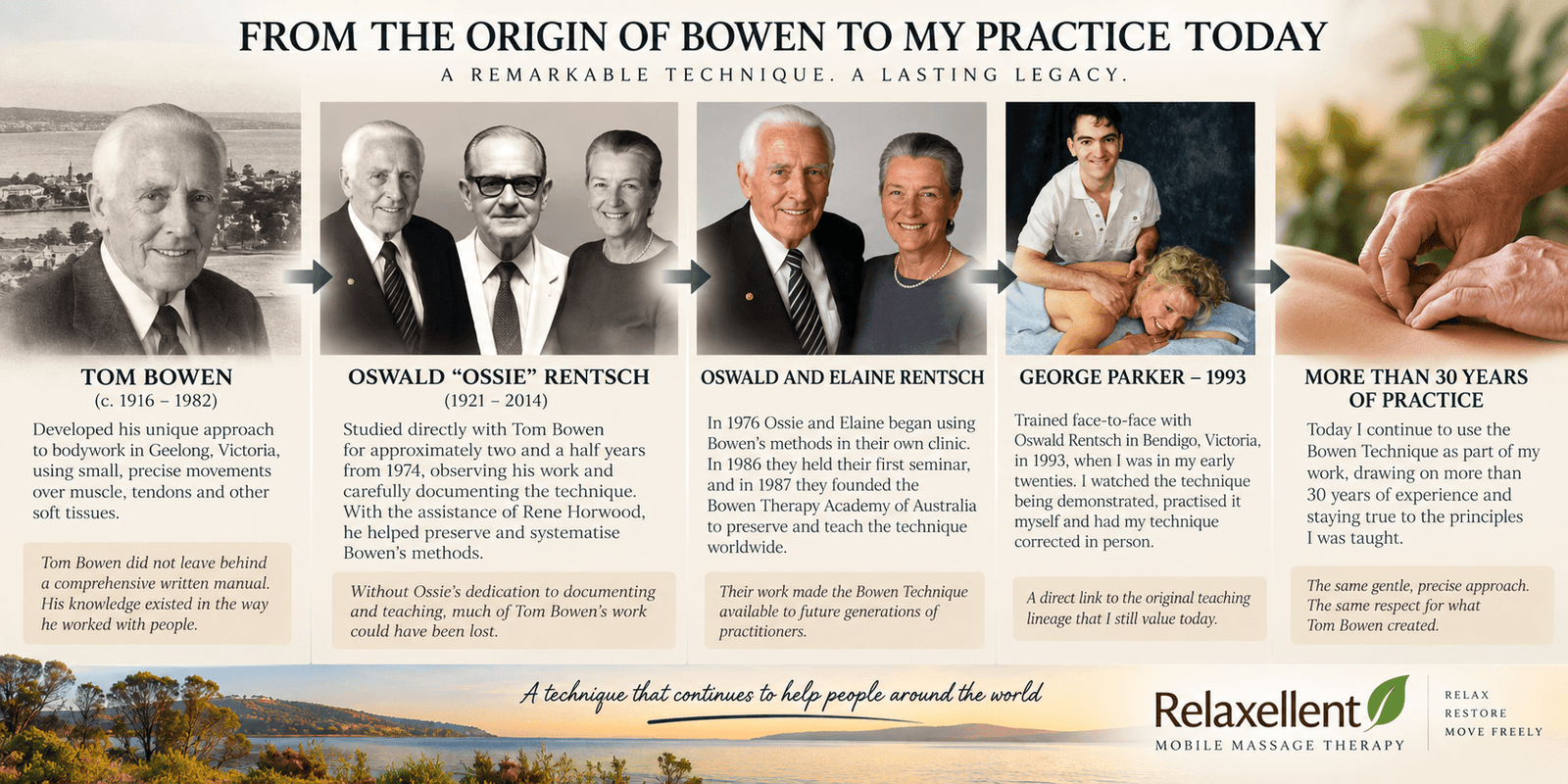
And more than three decades later, the technique Ossie taught me remains an important part of the way I work.
From Tom Bowen to Oswald Rentsch
Tom Bowen developed his distinctive method of bodywork in Geelong, Victoria, gradually refining an approachbased on precise rolling movements made with the fingers and thumbs at particular points on the body.
But there was a problem.
Tom Bowen hadn’t written his technique down.
There were no comprehensive notes, charts or manuals explaining his system. Much of what he knew existed inthe way he worked with the people who came through his clinic.
That changed when Oswald “Ossie” Rentschbegan studying with him in the 1970s.
Beginning in 1974, Rentsch spent approximately two and a half years closely observing Bowen’s work. Hedocumented what he saw, producing notes and diagrams and taking them back to Bowen for correction andapproval. Bowen’s long-time secretary and assistant, Rene Horwood, also helped with this process.
It was an enormously important undertaking.
Without people documenting and passing on that knowledge, much of Tom Bowen’s distinctive method couldhave disappeared with him.
Preserving the Original Bowen Technique
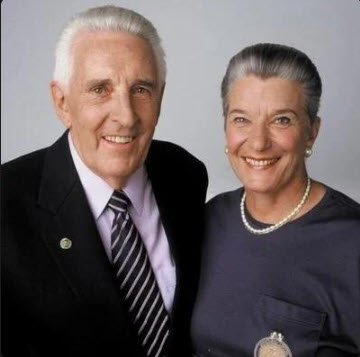
Oswald “Ossie” and Elaine Rentsch—founders of the Bowen Therapy Academy of Australia. Togetherthey played a pivotal role in preserving and teaching the Bowen Technique to future generations ofpractitioners.
Oswald and his wife,Elaine Rentsch, began using Bowen’s methods in their own clinic in Hamilton, Victoria, in1976. Following Tom Bowen’s wishes, they waited until after his death before beginning to teach the technique,holding their first seminar in Perth in 1986.
In 1987 they founded the Bowen Therapy Academy of Australia, with a particular emphasis on preserving andteaching the method they had learned from Bowen.
That’s the history that makes my own introduction to Bowen particularly meaningful to me.
I Learned Directly from Oswald Rentsch
In 1993, when I was in my early twenties, I travelled to Bendigo to undertake my Bowen training with OssieRentsch himself.
This wasn’t something I learned decades later through an online program, a recording or a succession ofdifferent teachers.
I was taught face-to-face by the practitioner who had personally studied Tom Bowen’s work, documentedit and helped preserve it for future generations.
I watched the movements being demonstrated. I practised them myself. My positioning and technique could beobserved and corrected in person.
At the time, I probably didn’t fully appreciate how significant that connection would eventually become.
More than 30 years later, I certainly do.
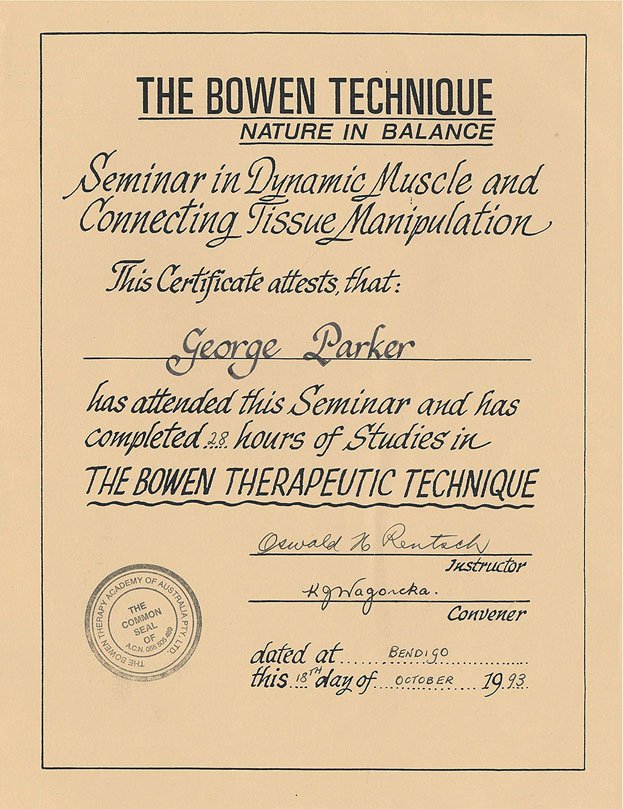
My original Bowen Technique training certificate, Bendigo, 18 October 1993 — signed by Oswald Rentsch..
Tom Bowen developed the work.
Oswald Rentsch studied and documented it.
In 1993, I learned it directly from Oswald Rentsch.
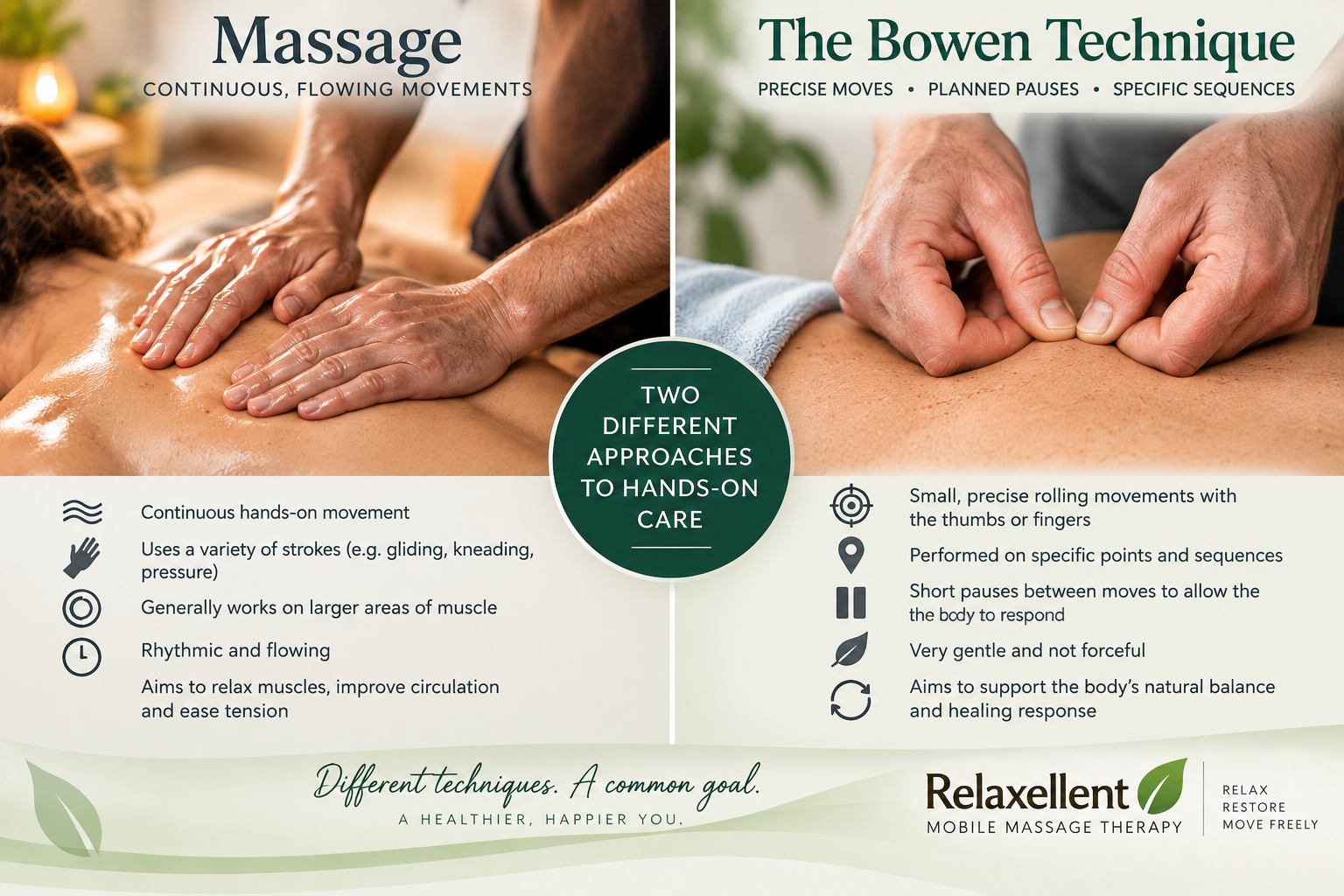
Bowen Is Quite Different from Massage
I was already working as a masseur when I learned Bowen, so one of the first things that struck me was justhow different the two approaches were.
A Bowen treatment isn’t based on continuously rubbing, kneading or manipulating muscles.
Instead, the practitioner performs small, deliberate rolling movements with the thumbs or fingers overprecise areas of soft tissue, followed by characteristic pauses that allow time before the next sequence ofmovements is performed. The original Bowen teaching describes these gentle rolling-type movements overspecific points of the body.
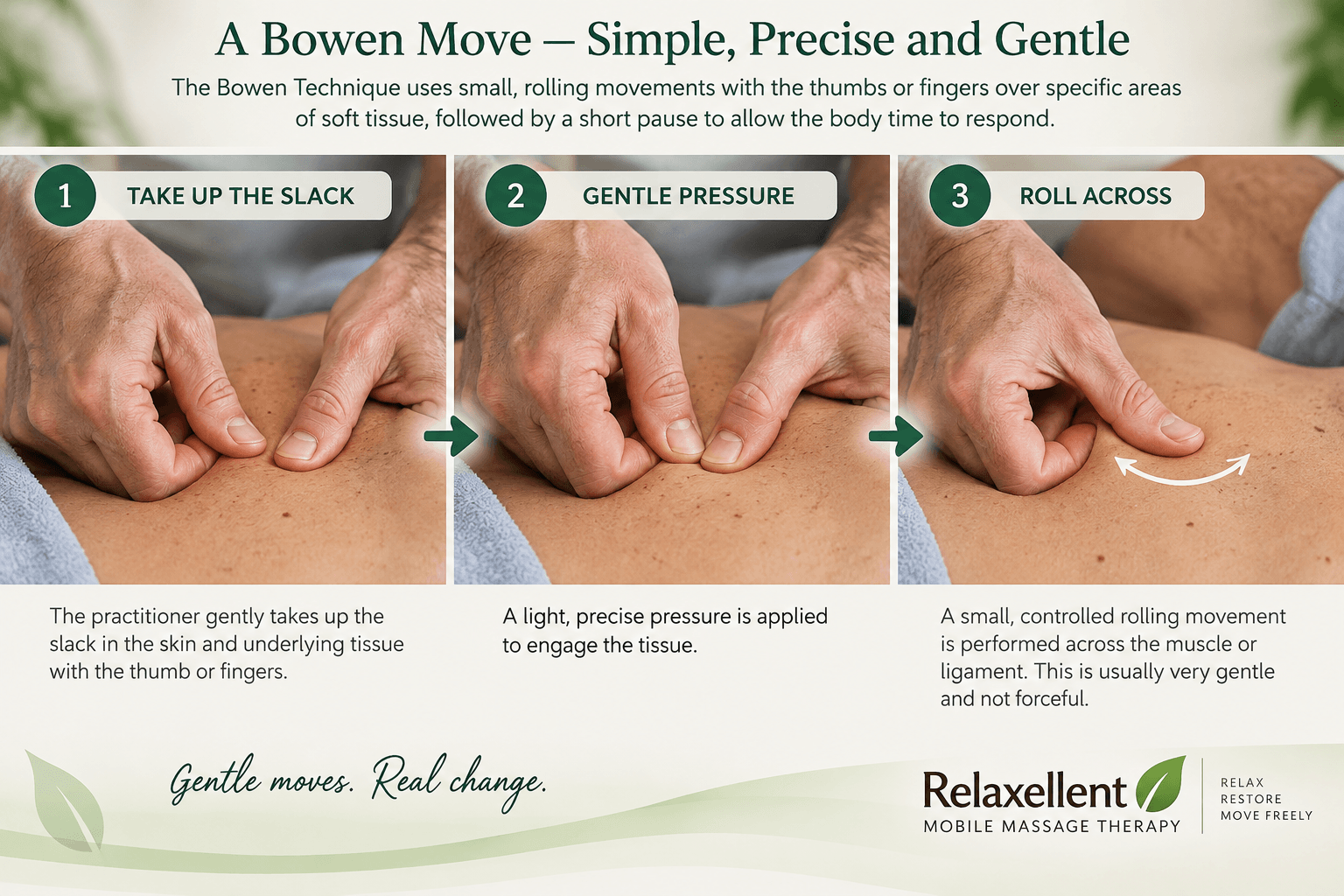
The treatment can therefore appear surprisingly simple.
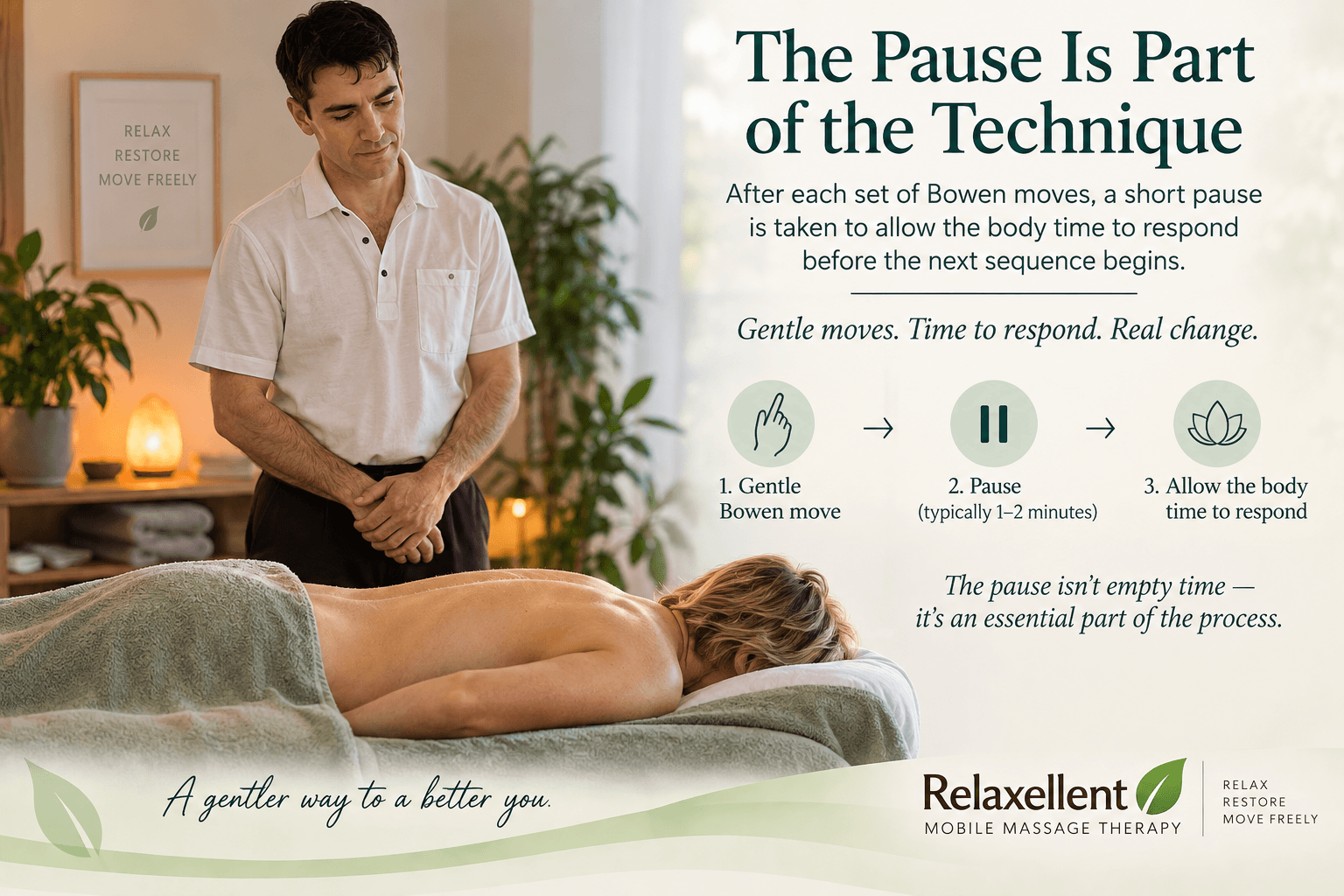
There may be a sequence of carefully placed moves, followed by a pause of a couple of minutes, beforereturning to perform the next sequence.
Those pauses aren’t simply empty time.They’re part of the way Bowen was traditionally taught.
What Does a Bowen Treatment Feel Like?
Don’t expect a conventional massage.
Bowen involves gentle, precise movements over particular muscles and soft tissues, followed at certain points by brief periods in which you’re simply allowed to rest. There is no vigorous kneading, heavy pressure or forceful manipulation.
Many people find the treatment surprisingly gentle. Depending on the area being worked on, Bowen may also be performed through light clothing, making it an option for people who don’t necessarily want a conventional massage treatment.
That material comes directly from the corresponding section in your original version. Original Write Up
Why I Chose to Treat One Person at a Time
One of the unusual things about Bowen is that more treatment doesn’t necessarily mean better treatment.
The aim isn’t to fill an arbitrary number of minutes with unnecessary movements. It’s to perform the appropriate sequences carefully and allow the pauses that form part of the method.
Because of those pauses, Bowen practitioners have sometimes worked with several people simultaneously—performing a sequence with one person, leaving them to rest and moving to another treatment room beforereturning.
I’ve seen Bowen practised this way.
It was never the way I wanted to work.
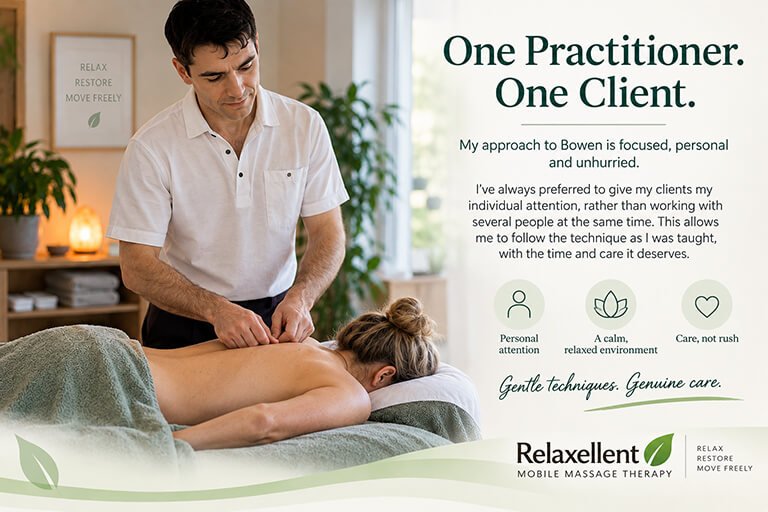
I’ve always preferred giving the person I’m treating my individual attention rather than moving between severalclients.
That’s been my approach for more than three decades.
Why I Kept Bowen Separate from Massage
When I originally trained, we were taught to treat Bowen as a therapy in its own right rather than simply adding afew Bowen moves into a massage.
I’ve continued to respect that distinction.
So although I’m both a massage therapist and Bowen practitioner, a Bowen treatment isn’t simply anothermassage technique that I mix into a relaxation or deep-tissue massage.
It is a separate approach with its own sequences, timing and pauses.
That distinction is important because if someone books Bowen with me, they’re receiving the technique as Iwas originally taught it—not merely a few Bowen-inspired movements added to an ordinary massage.
What Do People Seek Bowen For?
People commonly seek Bowen for musculoskeletal concerns such as neck discomfort, back pain, muscular tension, restricted movement and general aches and pains.
I don’t present Bowen as a miracle cure. I see it as a gentle complementary bodywork approach that may be worth considering depending on the person, their symptoms and what they’re hoping to achieve
More Than 30 Years of Experience
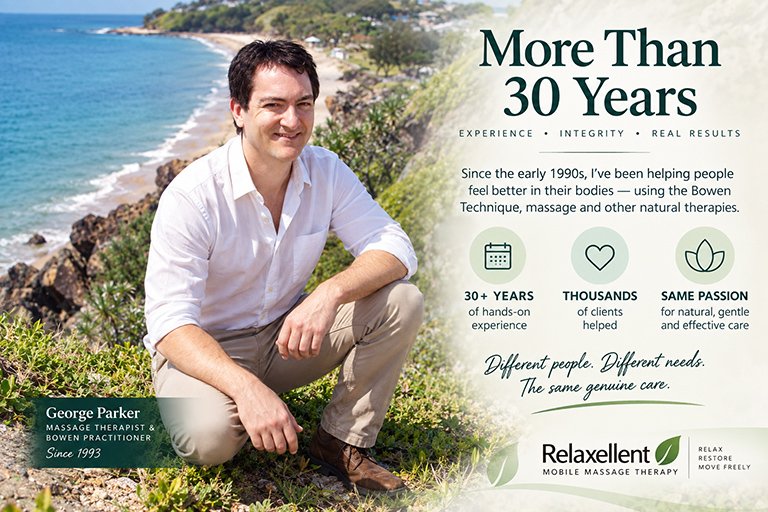
When I first began practising Bowen in the early 1990s, something interesting happened.
People who had originally known me as a massage therapist began returning and asking specifically for “the Bowen.”
Over the years I developed a group of clients who would come specifically for Bowen treatments, while some of my regular massage clients would choose Bowen between their massage appointments.
Because much of that work came through existing clients and word of mouth, I never really needed to advertise Bowen.
That’s one reason you may only now be discovering it on the Relaxellent website, even though I’ve beenpractising it since 1993.
After more than three decades, I’ve decided it’s time to make it more visible
Close to the Source – and Still Practised Today
There are now many schools, interpretations and variations of Bowen-style bodywork.
My own approach has been shaped by something much earlier: the hands-on training I received from Oswald Rentsch in 1993, relatively early in the period when he and Elaine were taking the Bowen Technique beyond its Victorian origins and teaching it more widely.
I’ve deliberately tried to retain the principles and technique that I was taught rather than continually adding new elements to it.
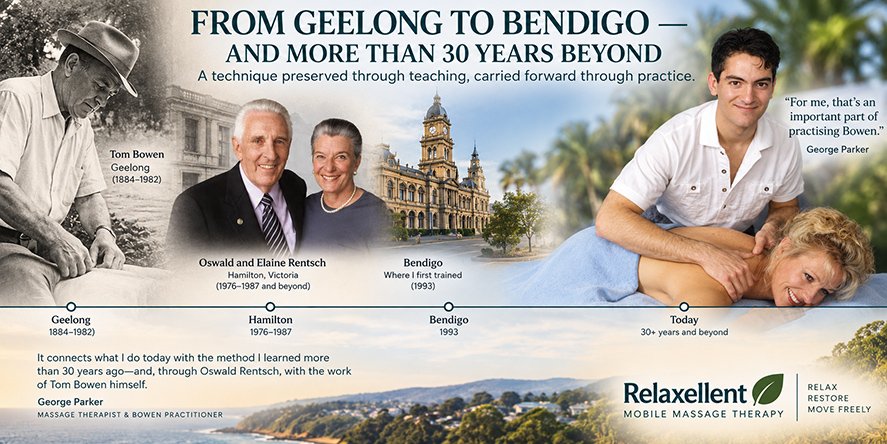
A technique preserved through teaching, carried forward through practice.
For me, that’s an important part of practising Bowen.
It connects what I do today with the method I learned more than 30 years ago—and, through Oswald Rentsch, with the work of Tom Bowen himself.
Our massage, bowen, reikiand naturopathicservices extend from Shepparton to the surrounding areas ofEchuca, Benalla, Kyabram, Wangaratta, Cobram and Bendigo.

EXTRA FREE 20 MINUTES MASSAGE