It’s one of the most common questions people ask after their first session.
“How often should I come back?”
If you’ve been searching for massage Shepparton and wondering whether once a month is enough — or whether you need more — this guide gives you a clear, practical answer.
There’s no single right number.
But there is a right framework.
And once you understand it, the answer for your situation becomes obvious.

Why Frequency Matters More Than Most People Realise
Most people treat massage like a one-off fix.
Something hurts. They book. They feel better. They wait until it hurts again.
👉 That approach works — but only barely.
Here’s the problem.
Tension builds faster than it resolves.
If you’re sitting at a desk for 8 hours a day, five days a week — that’s 40 hours of postural load every week.
One session a month addresses a fraction of that.
The body never fully unwinds.
It just gets brief moments of relief before the tension re-accumulates.
Massage Shepparton works best as a consistent practice — not an occasional rescue.
The difference is significant.
One session offers relief.
A consistent rhythm creates a new baseline.
Less tension overall.
Faster recovery between sessions.
A body that holds less and releases more easily each time.
The Key Factor: What Are You Managing?
Frequency isn’t one-size-fits-all.
The right answer depends on what you’re working with.
There are three main categories:
🔹 Active pain or injury
🔹 Ongoing tension and stress
🔹 General maintenance and prevention
Each has a different ideal rhythm.
If You’re Managing Active Pain or Injury
This is the highest-need category.
Active pain means something is currently wrong.
A muscle strain.
Acute neck or lower back pain.
Post-exercise soreness that isn’t clearing.
A flare-up of a recurring issue.
👉 In this phase, weekly sessions are usually appropriate.
Here’s why.
When the body is in a pain pattern, it creates a feedback loop.
Pain causes muscle guarding.
Guarding increases tension.
Tension amplifies pain.
Frequent treatment interrupts that loop before it becomes entrenched.
Weekly sessions allow each treatment to build on the last.
The tissue responds progressively — not just temporarily.
Deep tissue massage is particularly effective in this phase.
It works through the layers of chronic holding.
It addresses trigger points and fascial restriction.
It gets results faster than lighter work when the problem is acute.
⚠️ Most acute issues — if treated consistently — begin to resolve noticeably within three to four sessions.
After that, the frequency can step down.
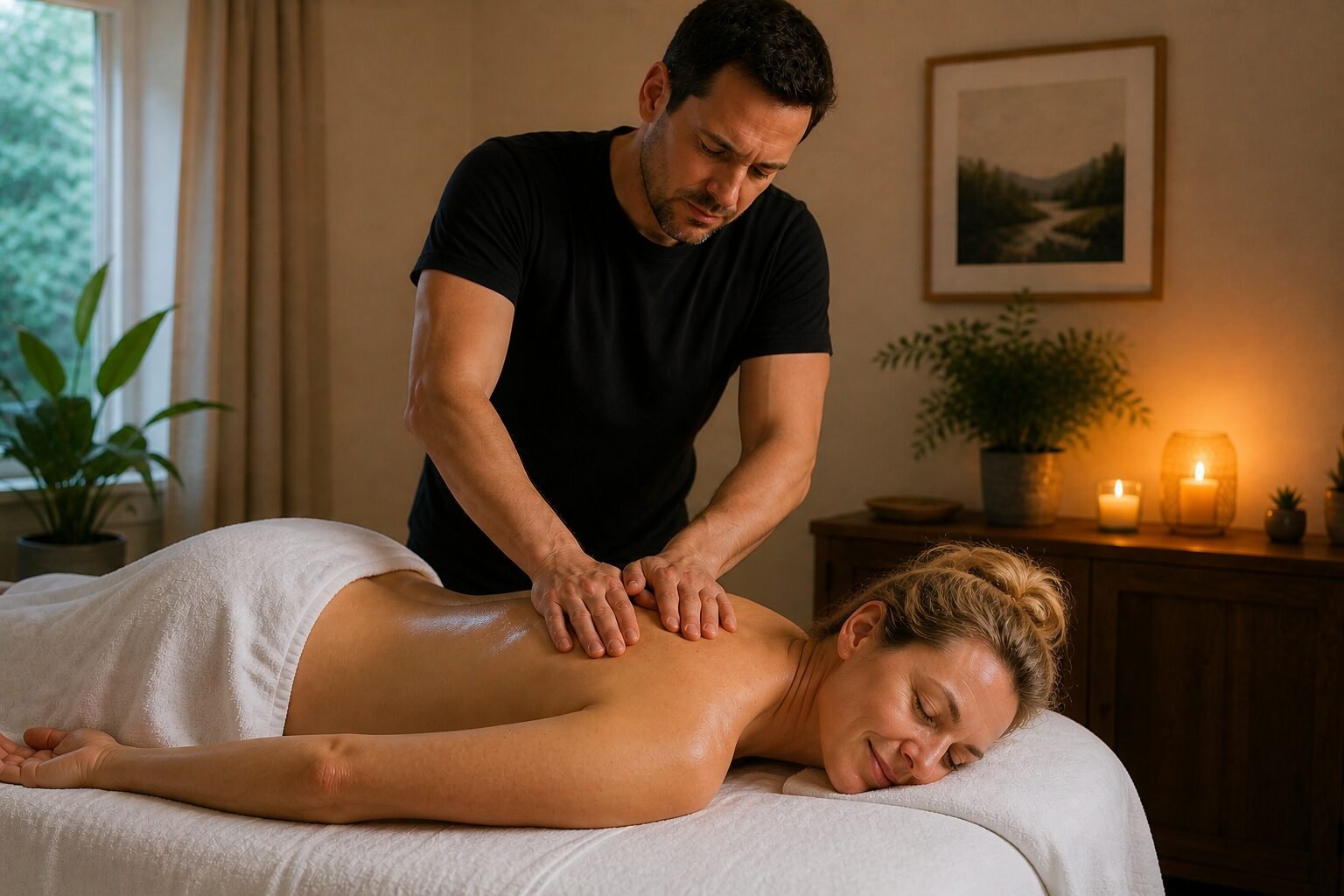
If You’re Managing Ongoing Tension and Stress
This is the most common category for people searching massage Shepparton.
You’re not in acute pain.
But something is always tight.
The neck.
The shoulders.
The lower back.
It eases after a session.
Then it comes back within a week or two.
👉 Fortnightly sessions work best here.
Why fortnightly and not monthly?
Because two weeks is roughly how long it takes for tension to re-accumulate to its previous level — for most people in physically or mentally demanding work.
Monthly sessions mean you spend most of the month at high tension.
You get one week of relief.
Then it builds again.
Fortnightly keeps the baseline lower.
Each session finds less to undo.
Which means the treatment goes deeper and holds longer over time.
This is the rhythm that creates the most noticeable long-term change.
🔹 For people whose tension is driven significantly by stress and nervous system activation, deep relaxation massage works well alongside more targeted remedial treatment.
It addresses the whole system — not just individual muscle groups.
If You’re Focused on General Maintenance
Some people don’t have a specific complaint.
They feel reasonably well.
But they know tension accumulates.
They want to stay ahead of it.
👉 Monthly sessions are appropriate here.
Monthly maintenance works when:
- You have a physically manageable job or lifestyle
- You don’t carry significant chronic tension
- You’re not managing a recurring injury or condition
- Your sleep, stress levels, and recovery are generally good
Think of it like servicing a car.
Nothing is broken.
But regular attention keeps everything running well — and prevents small issues from becoming significant ones.
⚠️ The risk with monthly sessions is underestimating how quickly tension builds.
If you have a particularly demanding month — physically or mentally — step up to fortnightly temporarily.
Then step back down.
Flexibility matters.
How to Know If You Need More Frequent Sessions
Some signs that your current frequency isn’t enough:
- Tension returns fully within a few days of each session
- You’re arriving at appointments significantly tighter than when you left the last one
- Sleep is still disrupted between sessions
- Pain or discomfort is affecting daily function
- You’re only getting one or two good days before the tightness returns
👉 These are signals to increase frequency — at least temporarily.
It doesn’t have to be permanent.
Get on top of it. Then maintain.
Session Length Also Matters
Frequency and duration work together.
A 60-minute session addresses a specific region well.
But if you carry tension across multiple areas — neck, shoulders, back, hips, legs — a single hour doesn’t cover everything.
👉 For people managing widespread tension, a two-hour massage allows thorough work across the full body in one appointment.
This is particularly useful when fortnightly sessions are the rhythm — because it means nothing gets left undertreated.

Frequency by Situation: A Practical Guide
Here’s a clear breakdown:
Weekly:
- Active injury or acute pain
- Post-surgery or rehabilitation support
- High physical demand (manual work, intensive training)
- Anxiety or stress significantly affecting sleep and function
Fortnightly:
- Chronic but manageable neck, shoulder, or back tension
- Desk-based work with consistent postural load
- Moderate stress that accumulates noticeably over two weeks
- Recovering from a resolved acute issue
Monthly:
- General prevention and maintenance
- Low-tension lifestyle with good recovery
- Keeping ahead of known problem areas before they flare
👉 Most people in Shepparton — realistically — sit in the fortnightly category.
The lifestyle here involves long commutes, desk work, physical trades, and the general load of busy family and work life.
Fortnightly massage Shepparton is where the meaningful, compounding results happen.
What Happens When You’re Consistent
This is worth understanding clearly.
Because it changes how people think about massage.
Session 1: The body releases surface tension. Movement improves. Relief is noticeable but may not hold for long.
Sessions 2–3: Deeper layers begin to release. The body starts to recognise the pattern. Recovery between sessions improves.
Sessions 4–6: The baseline drops. There’s less tension to work through at the start of each appointment. Treatment goes deeper and holds longer.
Ongoing: The body holds less as a default. Flare-ups become less frequent. Recovery is faster when they do occur.
👉 This is why people who commit to consistent massage Shepparton sessions report results that feel qualitatively different from occasional treatment.
It’s not just that each session is better.
It’s that the body between sessions is better.

Does It Matter When You Book?
Timing within the week can affect how long the results hold.
A few practical notes:
✔ End of week sessions — booking Thursday or Friday means you carry the results into the weekend, when rest supports recovery naturally.
✔ After high-demand periods — if Monday to Wednesday is your heaviest work period, mid-to-late week sessions address accumulated load.
✔ Evening sessions — for people managing stress and sleep issues, evening massage allows the nervous system to stay in a relaxed state and transition directly into rest. Late-night massage is available for exactly this reason.
✔ Consistency over perfection — the same day each week or fortnight works better than irregular scheduling. The body responds to rhythm.
A Note on Accessibility
One of the most common reasons people don’t maintain frequency is logistics.
Driving to a clinic.
Fitting it into a schedule.
Travelling home afterwards.
👉 Mobile massage Shepparton removes all of those barriers.
Your therapist comes to you.
You don’t travel.
You don’t sit in a waiting room.
And when the session ends — you’re already home.
That convenience is often the difference between someone maintaining fortnightly sessions and someone booking once every three months when things get bad.
Learn more about mobile massage in Shepparton here.
The Simple Answer
If you want to know how often to get a massage Shepparton — here it is:
👉 More often than you currently do.
Most people underestimate how quickly tension accumulates.
And they overestimate how much one session can undo.
Start with whatever frequency is realistic for you.
Then adjust based on how long the results hold.
If tension returns quickly — increase frequency.
If you’re maintaining well — hold the rhythm.
The goal is a body that functions better between sessions — not just immediately after them.
Explore all available services here. | Learn more about your therapist.