You’ve been told it’s sciatica.
Or maybe you’ve told yourself it’s sciatica — because the pain travels from your buttock down your leg and that’s what sciatica does.
But there’s another condition that produces an almost identical symptom pattern.
One that responds very differently to treatment.
And one that massage therapy addresses far more directly than most people realise.
Piriformis syndrome is one of the most commonly misidentified conditions seen by remedial massage therapists across Shepparton and surrounding areas.
Understanding the difference between it and true sciatica isn’t just interesting — it’s essential for choosing the right treatment path.

What Is Sciatica?
Sciatica is a symptom, not a diagnosis.
It describes pain that travels along the sciatic nerve — the longest nerve in the body, running from the lower back through the buttock and down the leg.
True sciatica is caused by compression or irritation of the sciatic nerve at its root — typically where it exits the lumbar spine.
The most common causes are:
✔ A herniated or bulging disc in the lower back pressing on the nerve root ✔ Spinal stenosis — narrowing of the spinal canal ✔ Degenerative disc disease affecting the L4, L5, or S1 levels ✔ Spondylolisthesis — where one vertebra slips forward over another
The pain follows the nerve’s path precisely — from the lower back, through the buttock, down the back of the thigh, and often into the calf or foot.
⚠️ True sciatica originating from spinal compression requires medical assessment and management.
Massage is a useful adjunct for muscle tension and recovery — but the spinal source must be properly diagnosed.
What Is Piriformis Syndrome?
Piriformis syndrome is a different condition entirely.
The piriformis is a small, deep muscle located in the buttock.
It sits directly behind the hip joint, running from the sacrum to the top of the femur.
Its job is to externally rotate the hip — turning the leg outward — and help stabilise the pelvis.
The sciatic nerve runs either directly beneath the piriformis, or in some people, directly through it.
When the piriformis becomes tight, hypertonic, or develops trigger points — it compresses the sciatic nerve from the outside.
The result: pain, tingling, or numbness that travels down the leg.
👉 This is why piriformis syndrome is sometimes called “pseudo-sciatica.”
It mimics true sciatica almost exactly — but the source of the nerve compression is the muscle, not the spine.
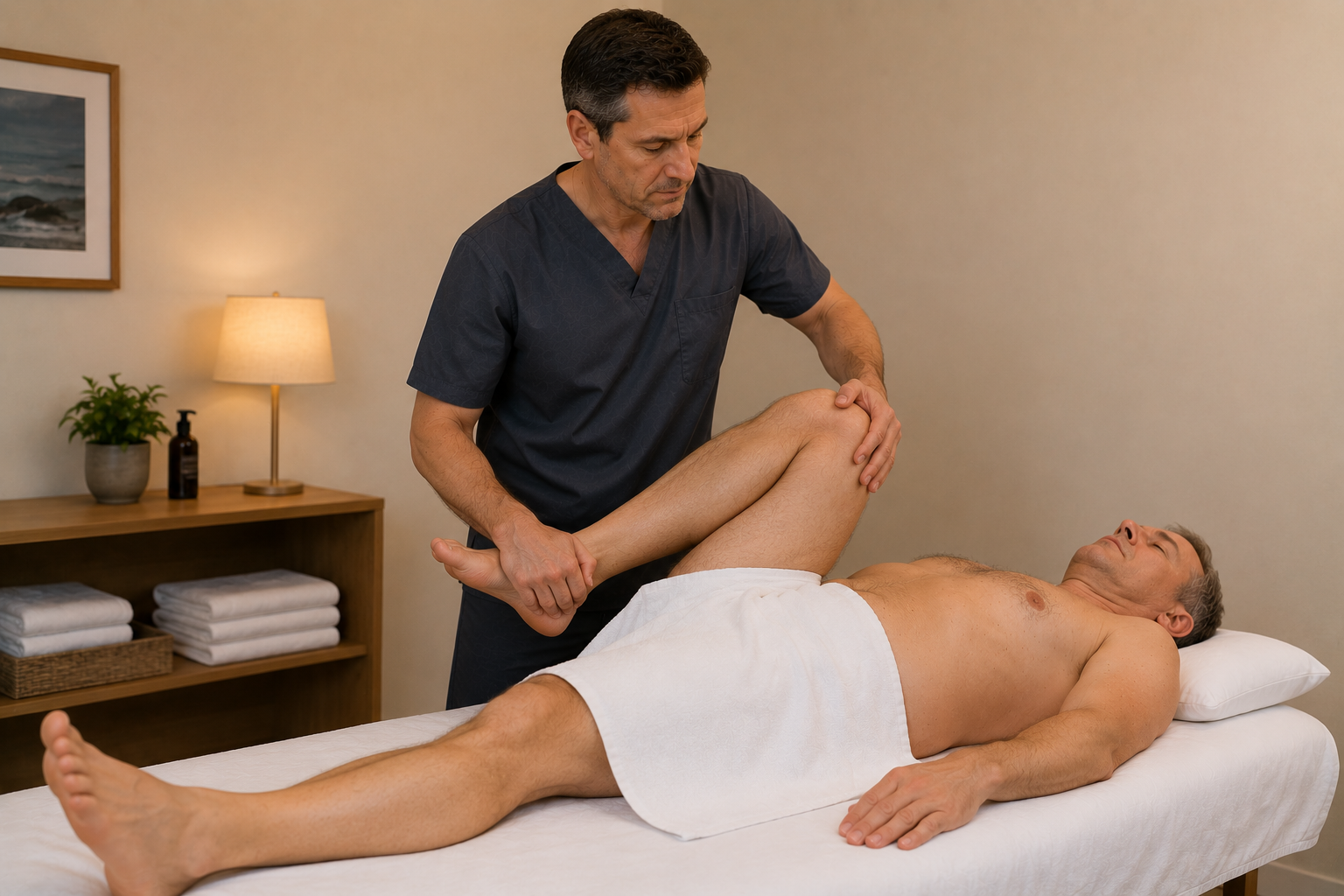
Piriformis Syndrome vs Sciatica: The Key Differences
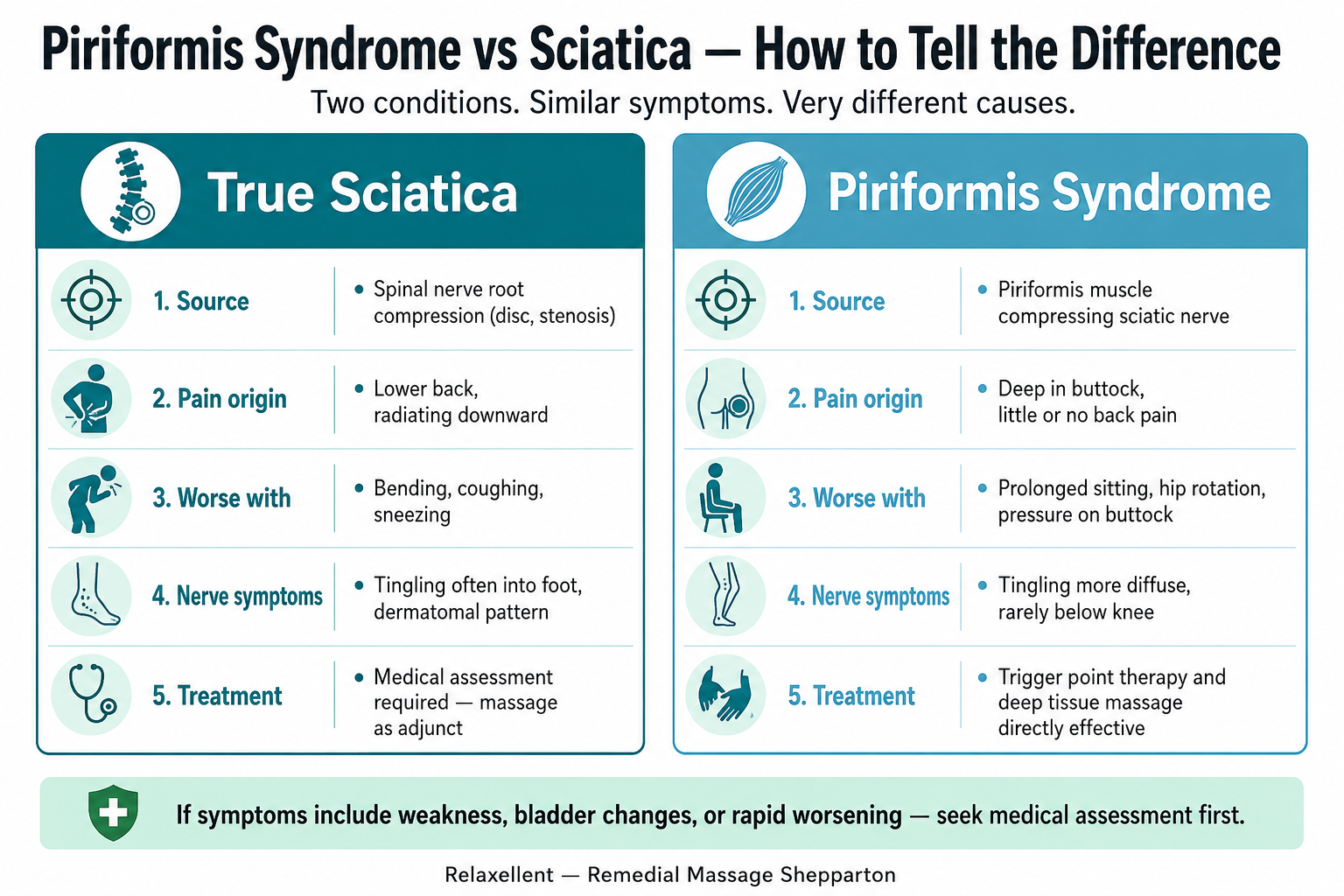
These two conditions share symptoms but behave differently in important ways.
Where the pain starts:
🔹 True sciatica — typically originates in the lower back, with pain radiating downward 🔹 Piriformis syndrome — pain usually starts deep in the buttock, with little or no lower back involvement
What makes it worse:
🔹 True sciatica — often aggravated by bending forward, coughing, or sneezing (which increases spinal pressure) 🔹 Piriformis syndrome — typically worse with prolonged sitting, hip rotation, or direct pressure on the buttock (e.g. sitting on a wallet)
Nerve symptoms:
🔹 True sciatica — tingling and numbness often extend into the foot, following a specific dermatomal pattern 🔹 Piriformis syndrome — tingling is more diffuse, rarely extends past the knee with the same precision
Response to movement:
🔹 True sciatica — walking sometimes relieves symptoms temporarily 🔹 Piriformis syndrome — certain hip movements (particularly internal rotation) reproduce the pain sharply
⚠️ These distinctions are guidelines, not diagnostic tools.
A qualified healthcare professional should assess any leg pain with neurological symptoms.
But understanding the pattern helps you communicate your symptoms accurately — and seek the right treatment faster.
Why Sitting Often Makes Piriformis Syndrome Worse
The piriformis is positioned directly beneath the gluteal muscles.
When you sit, your full body weight presses through the buttock — directly onto the piriformis.
If the muscle is already hypertonic or contains active trigger points, sustained sitting compresses it further.
That compression increases pressure on the sciatic nerve running beneath it.
👉 This is why many people with piriformis syndrome notice the pain build through a long work day — and feel it most sharply when they first stand up after sitting for extended periods.
It’s also why driving is a common aggravating factor.
The hip position in a car seat — flexed and slightly internally rotated — places the piriformis under sustained stretch while also compressing it from below.
For desk workers, delivery drivers, and anyone whose job involves prolonged sitting, this pattern is extremely common.
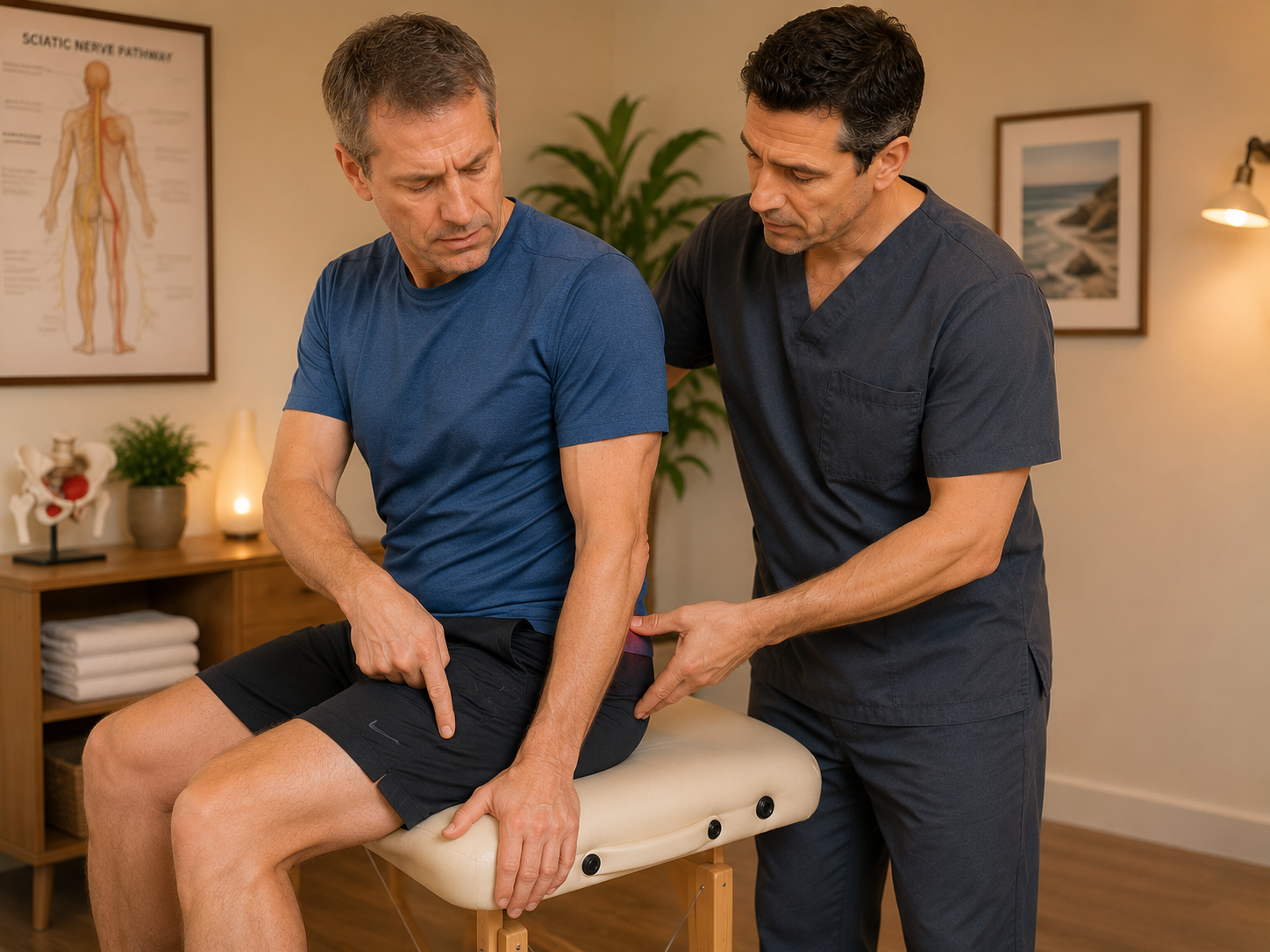
Can Massage Help Piriformis Syndrome?
Yes — and this is where piriformis syndrome differs significantly from true sciatica.
Because the source of the problem is muscular, not structural, massage therapy addresses it directly.
🔹 Trigger point therapy to the piriformis — the primary intervention. The piriformis is accessed through the gluteal muscles with careful, sustained pressure. Releasing its trigger points decompresses the sciatic nerve from the outside and produces rapid reduction in referred leg pain. This is often where the most immediate change is felt.
🔹 Deep tissue massage to the gluteal complex — the gluteus maximus, medius, and minimus all influence piriformis tension. Releasing the surrounding gluteal muscles reduces the compression environment the piriformis sits in.
🔹 Hip flexor release — when the hip flexors are chronically tight, the piriformis compensates by working harder to stabilise the pelvis. Releasing the psoas and iliacus reduces the demand on the piriformis and addresses a key upstream driver.
🔹 Myofascial release along the lateral hip and ITB — the fascial tension running along the outer hip frequently contributes to piriformis overload. Releasing this line reduces the rotational stress on the deep gluteal muscles.
🔹 Mobile massage — for people whose piriformis pain is aggravated by driving, getting to a clinic is itself a problem. Mobile remedial massage in Shepparton removes that barrier entirely. The therapist comes to you — no car seat compression before the session even begins.
A Real Scenario: An Office Worker with “Sciatica” That Wasn’t Sciatica
Picture an office manager in his early fifties.
He’d been told by a friend that his symptoms sounded like sciatica.
Pain deep in the left buttock. Occasional tingling down the back of the left thigh. Worse after long afternoons at the desk.
His GP found no spinal involvement on examination.
When he came in for assessment, the pain was reproduced immediately with direct palpation of the left piriformis — a classic sign of piriformis syndrome.
There was no lower back involvement. No pain below the knee.
After three sessions of targeted trigger point work to the piriformis and surrounding gluteal complex, combined with hip flexor release, the buttock pain had reduced by around seventy percent.
The thigh tingling had resolved entirely.
He continued with monthly maintenance sessions to manage the ongoing sitting load from his work pattern.
This is an extremely common presentation — and one that responds very well to targeted treatment.
When You Should Seek Medical Assessment
Massage is appropriate and effective for piriformis syndrome.
But some presentations require medical review first.
⚠️ Seek medical assessment if:
- Leg pain is accompanied by bladder or bowel changes
- Weakness in the leg or foot (not just pain or tingling)
- Pain followed a significant trauma or fall
- Symptoms are rapidly worsening rather than stable
- Tingling or numbness extends into the foot and is constant
These presentations may indicate a spinal or neurological cause that requires imaging and specialist assessment before manual therapy begins.
Between Sessions: What Helps
✔ Avoid sitting on hard surfaces for extended periods. Use a padded seat or standing desk intervals where possible.
✔ Remove wallets and phones from back pockets. Direct pressure on the piriformis through the pocket is a surprisingly common aggravating factor.
✔ Modify driving position. A small lumbar support and slightly reclined seat position reduces the hip flexion angle that loads the piriformis.
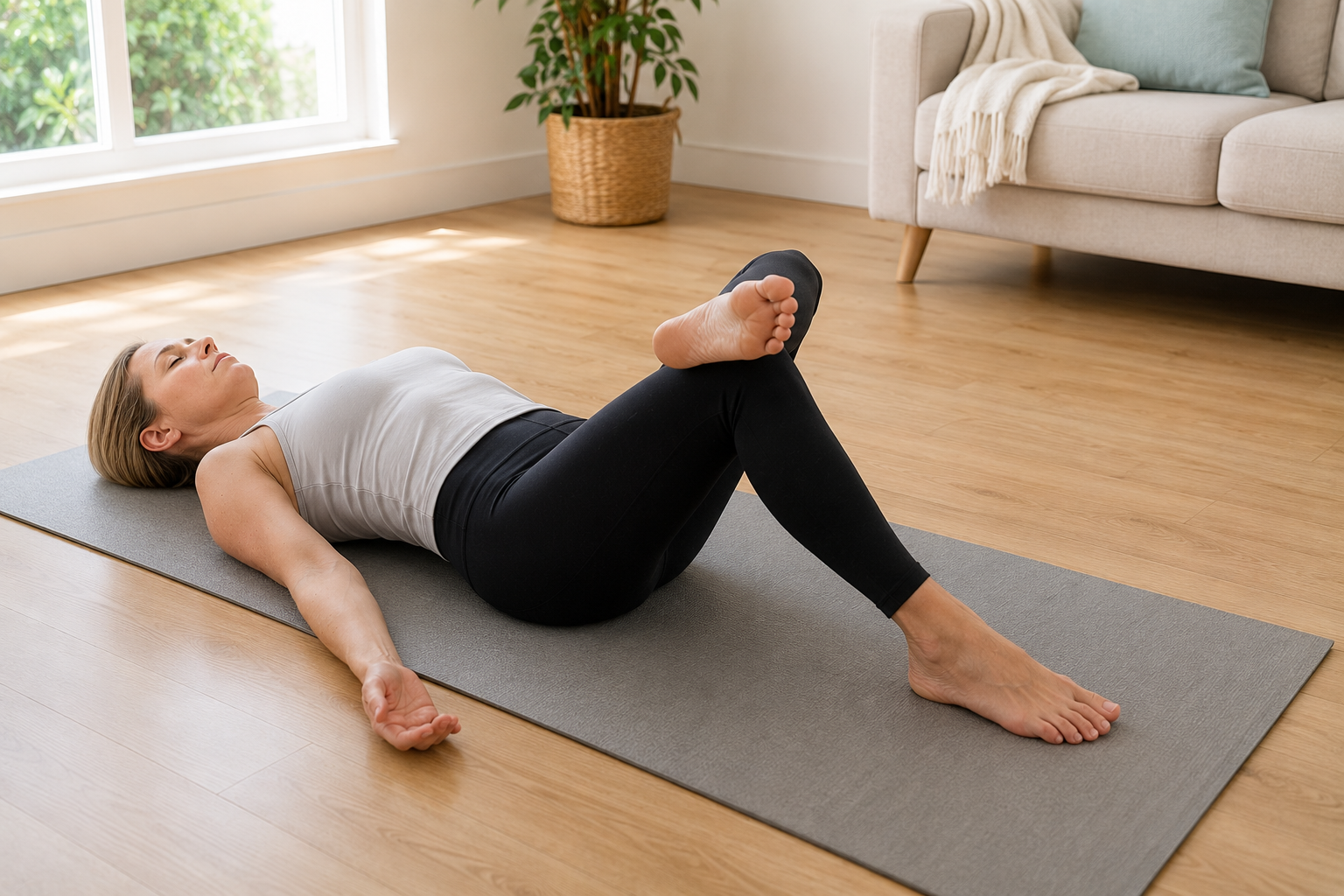
✔ Piriformis stretch — gently. Lying on your back, crossing the affected leg over the other with the ankle resting on the opposite knee, and gently pressing the knee away from the body creates a mild piriformis stretch. Hold for 30–45 seconds. Do not force it.
✔ Book consistently. A two-hour session allows thorough work across the gluteal complex, hip flexors, and lower back in a single visit — particularly useful in the early treatment phase when multiple areas need addressing.
Not All Leg Pain Is the Same — and That Distinction Matters
Being told “it’s sciatica” when the source is actually a tight piriformis means treating the wrong structure.
It means stretching the lumbar spine when you should be releasing a muscle.
It means waiting for disc changes to resolve when a few targeted sessions would address the actual cause.
Remedial massage in Shepparton can’t diagnose the difference — but a skilled therapist can identify whether the piriformis is involved and treat it accordingly.
For many people, that distinction alone changes the entire recovery trajectory.
👉 Explore the full range of treatments at Relaxellent and find out whether your “sciatica” might be something that responds much faster to the right hands-on approach.