You’ve tried the medication. The dark room. The ice pack.
Maybe they help for a few hours. Maybe they don’t help at all.
If migraines are a regular part of your life, you’ve probably wondered whether there’s something more you can do — something that addresses the cause rather than just managing the episode.
The research on massage and migraines is more compelling than most people realise.
And for many clients receiving remedial massage in Shepparton, a consistent treatment approach has meaningfully reduced both the frequency and severity of their migraines over time.
Here’s what the evidence actually shows — and what’s happening in your body when it works.
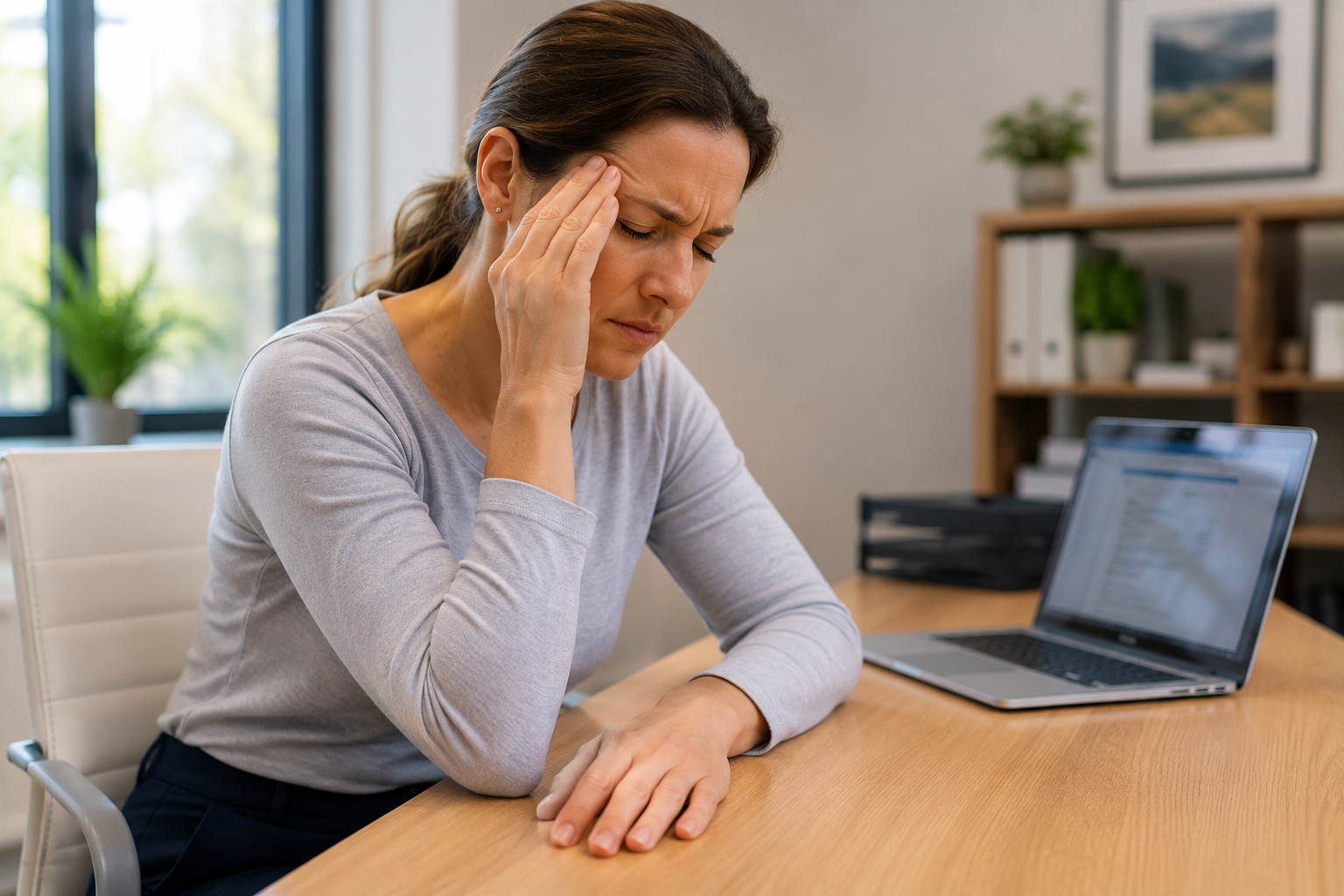
Why Migraines Aren’t Just “Bad Headaches”
Migraines are a neurological condition.
They involve changes in brain activity, altered blood flow, and heightened sensitivity of the nervous system — not simply tension or stress.
Common triggers include:
✔ Hormonal fluctuations ✔ Disrupted sleep ✔ Sustained muscle tension in the neck and upper back ✔ Jaw clenching and TMJ dysfunction ✔ Dehydration and dietary factors ✔ Stress and nervous system overload ✔ Sensory overstimulation
⚠️ Many of these triggers involve the musculoskeletal system directly.
That’s the entry point where massage becomes genuinely relevant.
Massage doesn’t treat the neurological event.
What it does is reduce or eliminate several of the physical triggers that consistently precede and provoke migraine episodes.
What the Research Actually Says
Several well-designed studies have examined the relationship between massage and migraine frequency.
The findings are consistent.
Regular massage — particularly targeting the neck, shoulders, and upper back — has been shown to:
✔ Reduce migraine frequency in chronic sufferers ✔ Decrease the duration of individual episodes ✔ Lower perceived pain intensity during attacks ✔ Reduce anxiety and cortisol levels that act as migraine triggers ✔ Improve sleep quality — itself a significant migraine risk factor
👉 One frequently cited study found that subjects receiving regular massage experienced significantly fewer migraines per week compared to a control group — with effects persisting beyond the treatment period.
This matters.
It suggests massage isn’t just producing short-term relief.
It’s changing the underlying conditions that make migraines more likely to occur.
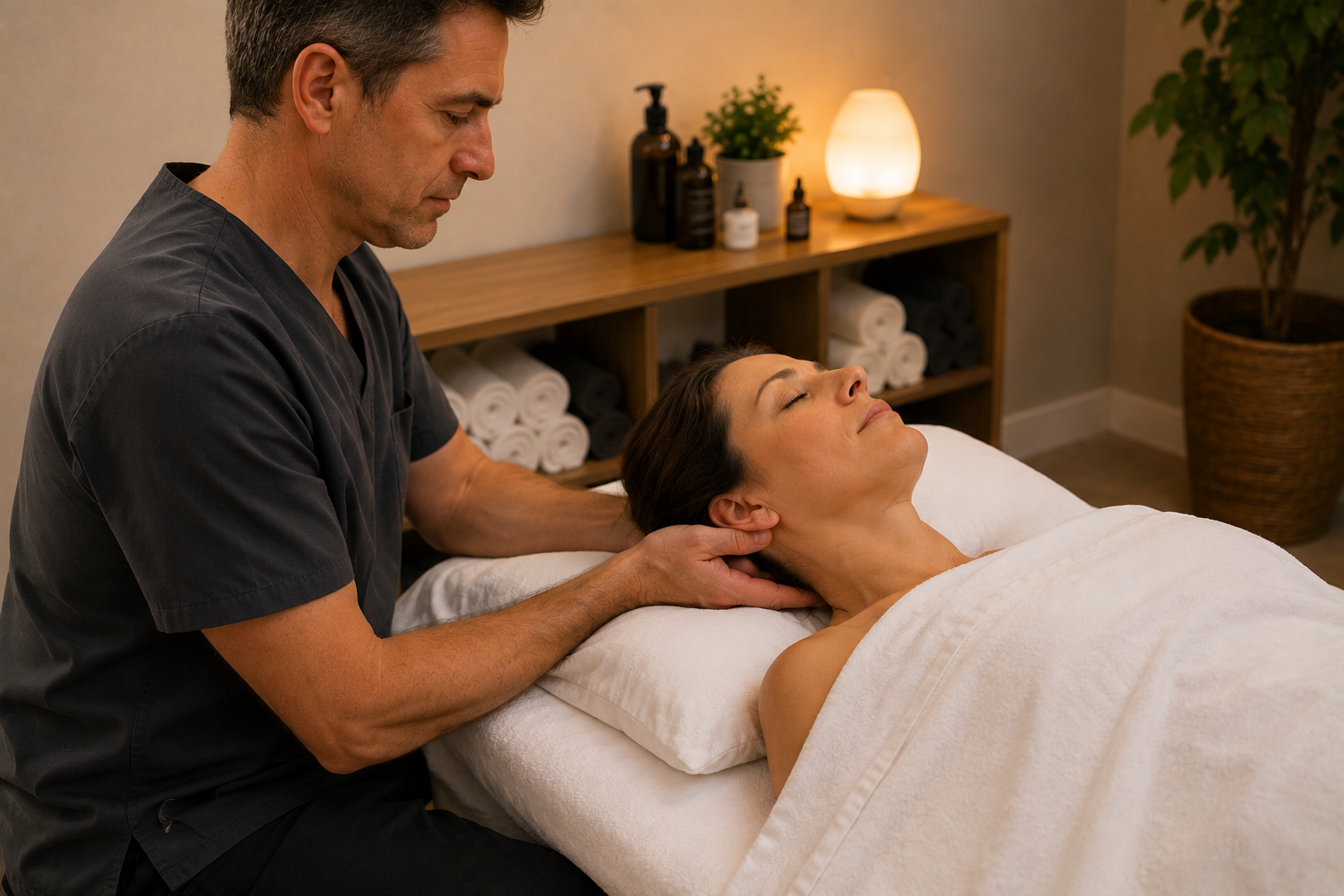
The Muscular Triggers Most Migraine Sufferers Don’t Know About
The most commonly overlooked migraine driver is cervicogenic — meaning it originates in the neck.
Cervicogenic headaches and migraines share overlapping mechanisms.
When the muscles of the upper cervical spine are chronically tight — particularly the suboccipital muscles at the base of the skull — they compress and irritate the greater occipital nerve.
That nerve runs from the upper neck, over the back of the skull, and forward toward the eye and temple.
When it’s irritated, the pain pattern closely mimics a classic migraine.
🔹 The upper trapezius and levator scapulae are also consistently involved.
These muscles run from the neck to the shoulder. When they carry trigger points, they refer pain into the base of the skull and temporal region — precisely where many migraines begin.
🔹 The sternocleidomastoid — running along the side of the neck — refers pain behind the eye and into the forehead when trigger points are active.
🔹 Jaw tension compounds all of this.
The masseter and temporalis, when chronically overloaded from clenching or bruxism, add another layer of referred pain feeding into the headache pattern.
How Targeted Massage Interrupts the Migraine Cycle
Effective migraine massage is not general relaxation work.
It’s specific, structured, and applied to the structures most likely driving the pattern.
🔹 Suboccipital release — the four small muscles at the base of the skull are released with sustained, careful pressure. This decompresses the greater occipital nerve and reduces one of the most direct physical contributors to migraine onset.
🔹 Trigger point therapy to the upper trapezius and levator scapulae — these muscles are almost universally involved in chronic headache presentations. Releasing their active trigger points removes a consistent source of referred pain into the skull and temples.
🔹 Sternocleidomastoid work — careful trigger point release along this neck muscle reduces referred pain to the eye, forehead, and face — symptoms that often accompany or precede migraines.
🔹 Indian head massage — this technique works directly across the scalp, temples, neck, and upper shoulder region. It’s particularly effective for people whose migraines involve significant scalp sensitivity and temporal pressure.
🔹 Migraine ease massage — a treatment specifically structured around the anatomy of migraine and tension headache presentations. It addresses the full chain of muscular drivers, not just the most obvious tension sites.
A Real Scenario: A Nurse With Weekly Migraines
Picture a hospital nurse in her late thirties.
She works rotating shifts across a busy ward.
Three to four times a month, she loses a full day to a migraine.
She described them as starting at the base of the skull — a deep, building pressure — before moving forward and settling behind her left eye.
Assessment found significant trigger point activity in the left suboccipital group, the left levator scapulae, and the left sternocleidomastoid.
Her upper trapezius was bilaterally elevated from years of sustained shoulder tension.
After six fortnightly sessions targeting these specific structures, her migraine frequency had dropped to once a month.
The episodes she did experience were shorter and less severe.
She no longer needed to take a full day off work for every migraine.
That kind of outcome isn’t unusual for people whose migraines have a significant cervicogenic component.
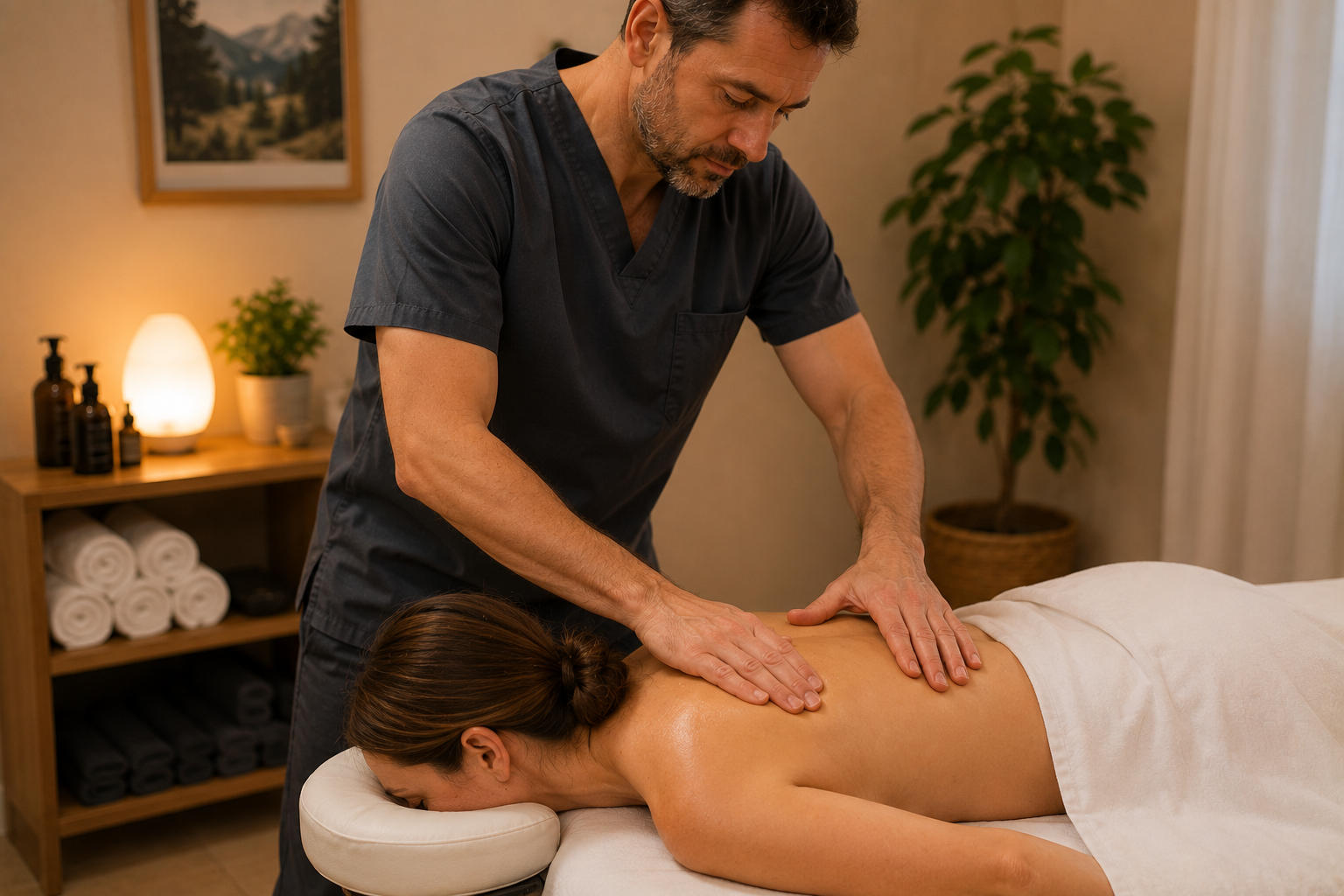
What to Expect From Treatment
Results vary depending on migraine type, frequency, and how much of the pattern is musculoskeletal in origin.
Some people notice a reduction after two or three sessions.
Others need four to six sessions before frequency meaningfully shifts.
✔ Consistency matters more than intensity. Fortnightly sessions during the initial phase allow progressive change in the underlying muscle tension without waiting for the pattern to fully re-establish.
✔ Communicate your triggers. The more your therapist understands your specific migraine pattern — timing, location, associated symptoms — the more precisely they can target treatment.
✔ Don’t book immediately after a migraine. The 24–48 hours following a severe migraine episode can leave the nervous system hypersensitive. Booking during a settled period produces better results.
✔ Mobile massage removes a significant barrier. Driving after a session — or when a migraine is building — is the last thing you want to do. Mobile massage in Shepparton means your therapist comes to you, so there’s no journey that could trigger or worsen symptoms.
Supporting Migraine Management Between Sessions
Massage is most effective when paired with good daily habits.
✔ Protect sleep consistency. Disrupted sleep is one of the most reliable migraine triggers. Massage for sleep can support nervous system downregulation for people whose sleep quality is also being affected.
✔ Monitor screen posture. Forward head position compresses the upper cervical spine and feeds directly into the suboccipital tension that drives cervicogenic headaches.
✔ Reduce jaw clenching. Many migraine sufferers also clench or grind. If your jaw is tight during the day, deliberately release it — teeth should rest slightly apart.
✔ Manage stress load actively. Cortisol is a well-established migraine trigger. Sustained stress without recovery creates the physiological conditions migraines thrive in.
✔ Stay hydrated. Dehydration is among the most common and avoidable migraine triggers. Two litres of water daily is a minimum for most adults.
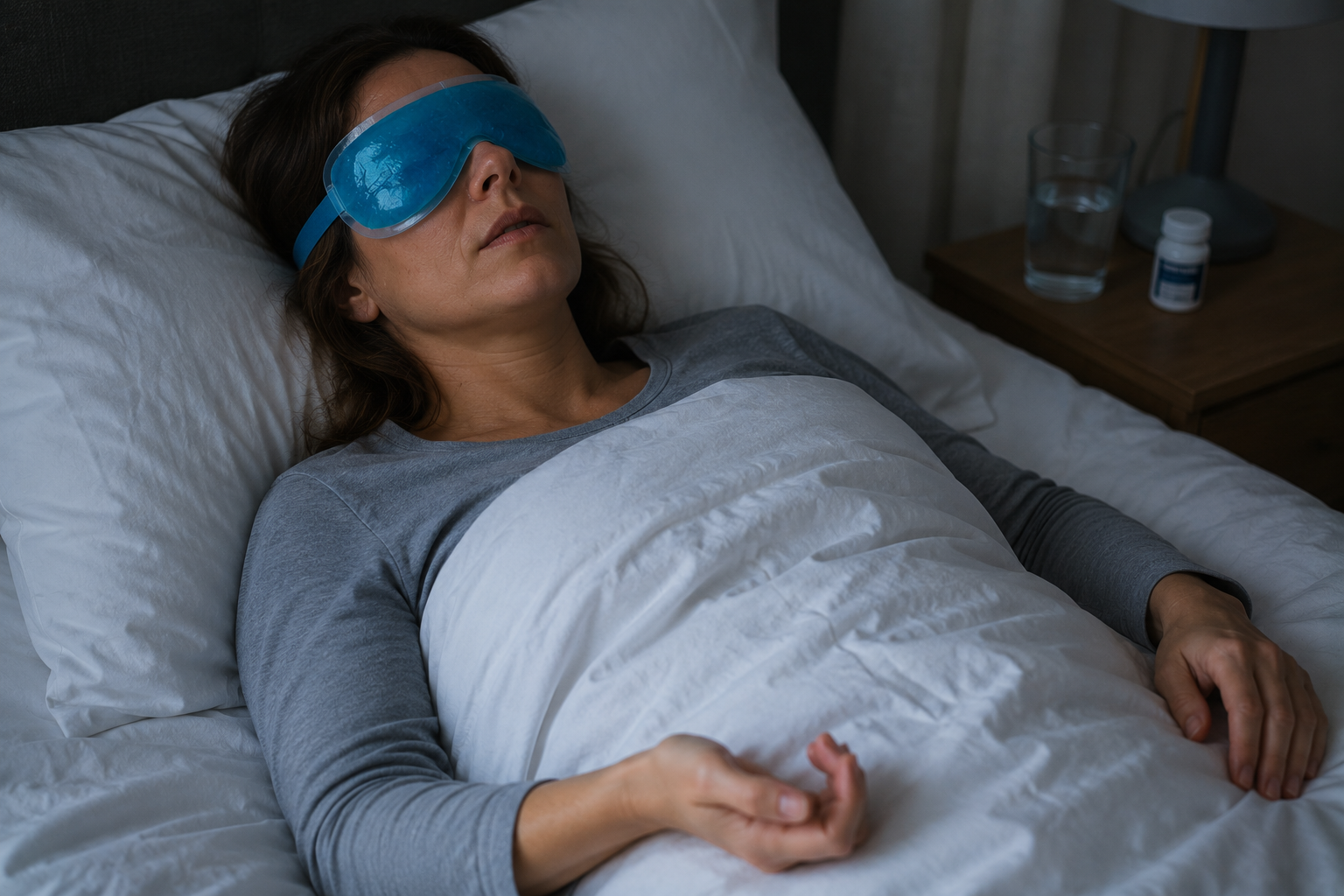
Massage Won’t Replace Migraine Medication — But It May Reduce How Often You Need It
For people with medically managed migraines, massage works alongside — not instead of — prescribed treatment.
The goal isn’t to replace medication.
It’s to reduce the frequency and severity of episodes so medication is needed less often.
That’s a meaningful quality of life shift for anyone who loses days to migraines each month.
Relaxellent provides mobile massage throughout Shepparton, Mooroopna, Kyabram, Echuca, and surrounding areas — so access to consistent treatment is never the barrier it might seem.
👉 Explore the full range of treatments at Relaxellent and find the right approach for the migraines your body has been dealing with.