You’ve heard remedial massage can help.
But you’re not sure what it actually involves.
Will it hurt? What do they assess? Do you need to explain everything upfront?
These are fair questions — and not enough people ask them before booking.
If you’ve been considering massage Shepparton for pain, tension, or recovery, this guide walks you through exactly what to expect.
No surprises. No guesswork. Just a clear picture of what a professional session looks like from start to finish.
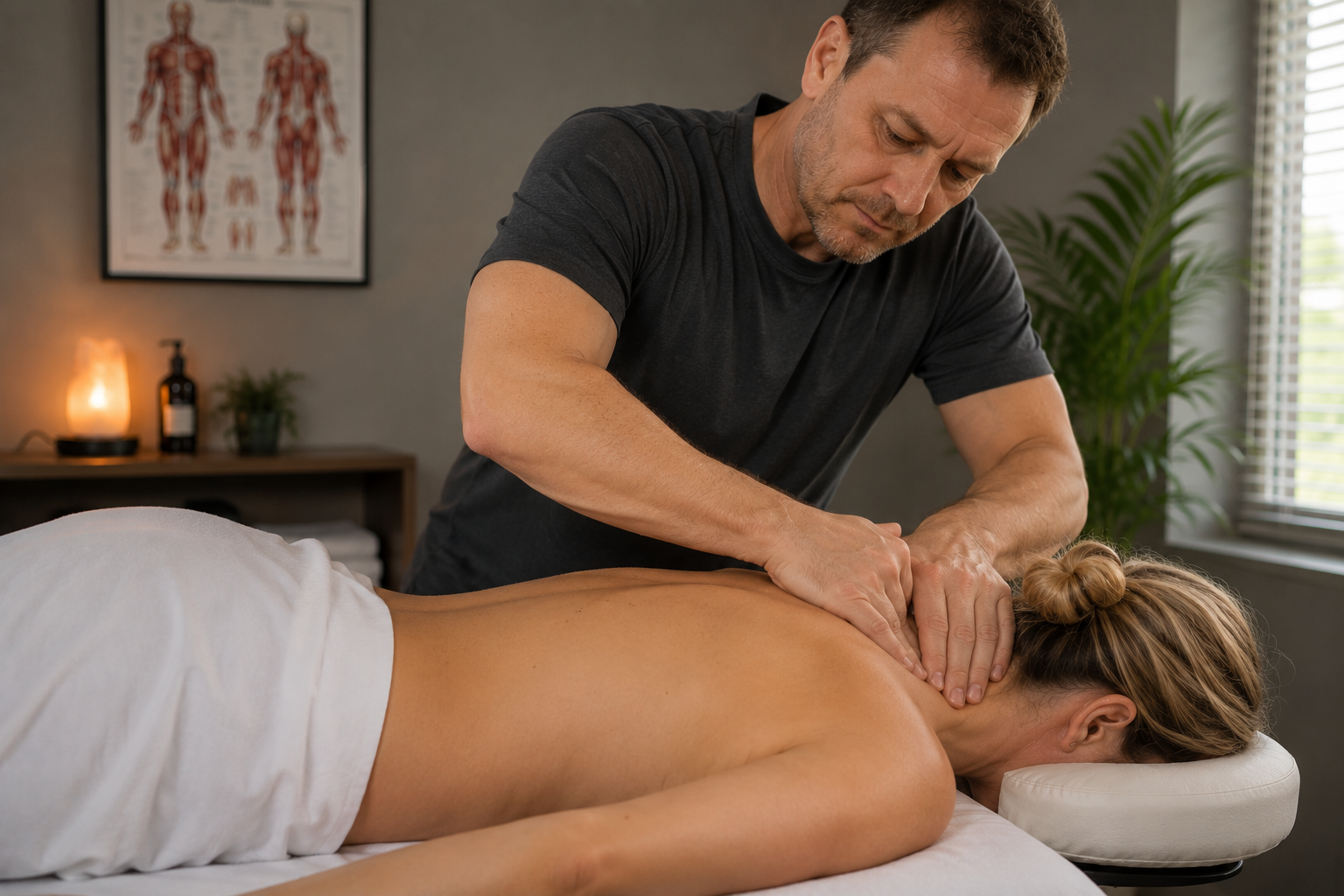
Remedial Massage vs Relaxation Massage — What’s the Difference?
This is the first thing worth understanding.
Relaxation massage is about calm. Comfort. General stress relief.
Remedial massage is about function.
It’s a targeted, outcome-focused treatment designed to assess and address specific musculoskeletal issues.
The therapist isn’t just working to make you feel good in the moment.
They’re working to identify what’s causing your pain — and correct it.
👉 Think of it like the difference between a warm bath and a physiotherapy session.
Both have value. But they serve very different purposes.
Remedial massage sits firmly in the clinical space — even when it also feels deeply relaxing.
If you’ve been managing ongoing neck pain, shoulder pain, lower back pain, or poor posture, this is the treatment category that addresses the root cause — not just the symptom.
Before the Session: The Initial Assessment
A proper remedial massage Shepparton session doesn’t begin on the table.
It begins with a conversation.
Your therapist will ask about:
✔ Your current complaint — where it is, when it started, what aggravates it ✔ Your health history — injuries, surgeries, conditions, medications ✔ Your lifestyle — posture, work setup, activity levels, sleep patterns ✔ Your goals — what you want to achieve from treatment
This isn’t small talk. It’s clinical information.
The answers directly shape how the therapist approaches your session.
🔹 For example: a person with lower back pain who works a desk job will be assessed differently from someone whose pain came from a sporting injury.
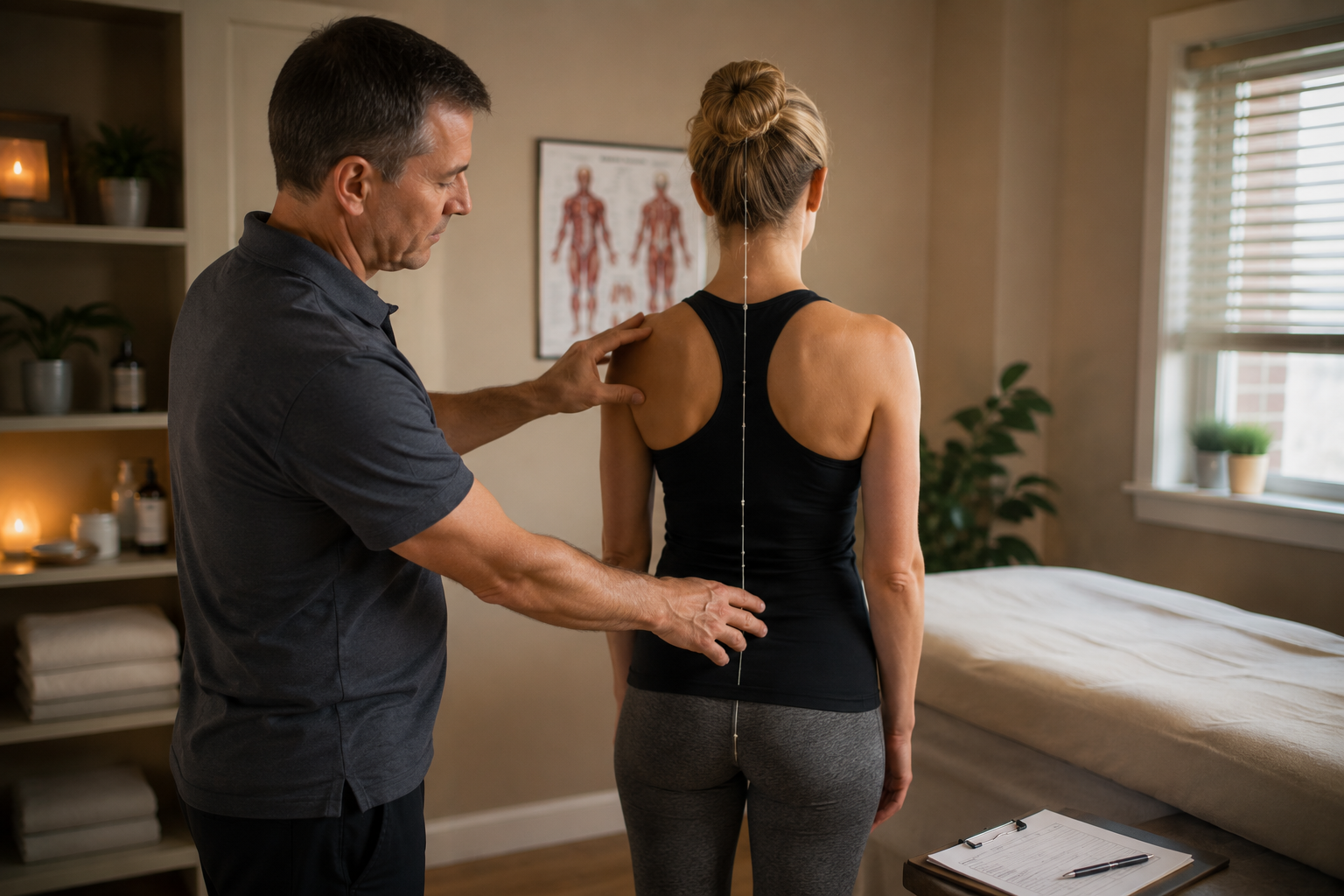
The therapist may also perform a brief postural assessment.
They’ll observe how you stand. How your shoulders sit. Whether your hips are level.
They might ask you to move in specific ways — turning your head, raising your arm — to identify where restriction exists.
⚠️ If a therapist skips this step entirely and goes straight to the table, that’s worth noticing.
Assessment is what separates remedial from generic massage.
On the Table: What the Therapist Is Actually Doing
Once you’re lying on the table, the work begins.
But it’s not random pressure applied to wherever feels tight.
A skilled therapist is constantly reading your tissue as they work.
They’re feeling for:
- Areas of hypertonic muscle — chronically contracted tissue that won’t release on its own
- Trigger points — localised knots that refer pain to other areas of the body
- Fascial restrictions — tightness in the connective tissue layer surrounding muscles
- Temperature and circulation differences between areas
- Asymmetries in muscle tone from left to right
👉 This palpation assessment continues throughout the entire session.
The therapist is adjusting their approach in real time based on what they find.
This is also why two people with “the same” shoulder pain can receive quite different treatment plans.
The body tells its own story — and a good therapist listens to it.
The Techniques Used in a Remedial Session
Remedial massage draws on a range of techniques — often within a single session.
🔹 Effleurage — long, gliding strokes used to warm tissue, assess the area, and promote circulation. Often used at the start and end of working a region.
🔹 Petrissage — kneading and lifting movements that work deeper into the muscle belly. Helps break up adhesions and improve blood flow to the tissue.
🔹 Trigger point therapy — sustained pressure applied directly to a trigger point until it releases. Can feel intense but produces significant relief when done correctly.
🔹 Myofascial release — slow, sustained pressure applied to the fascial layer. Works on the connective tissue rather than the muscle itself. Often addresses restrictions that other techniques don’t reach.
🔹 Deep transverse friction — a specific technique applied across muscle fibres, particularly around tendons and ligaments. Used to break down scar tissue and restore proper fibre alignment.
For complex presentations — particularly where scar tissue or fascial restriction is significant — IASTM therapy may be incorporated.
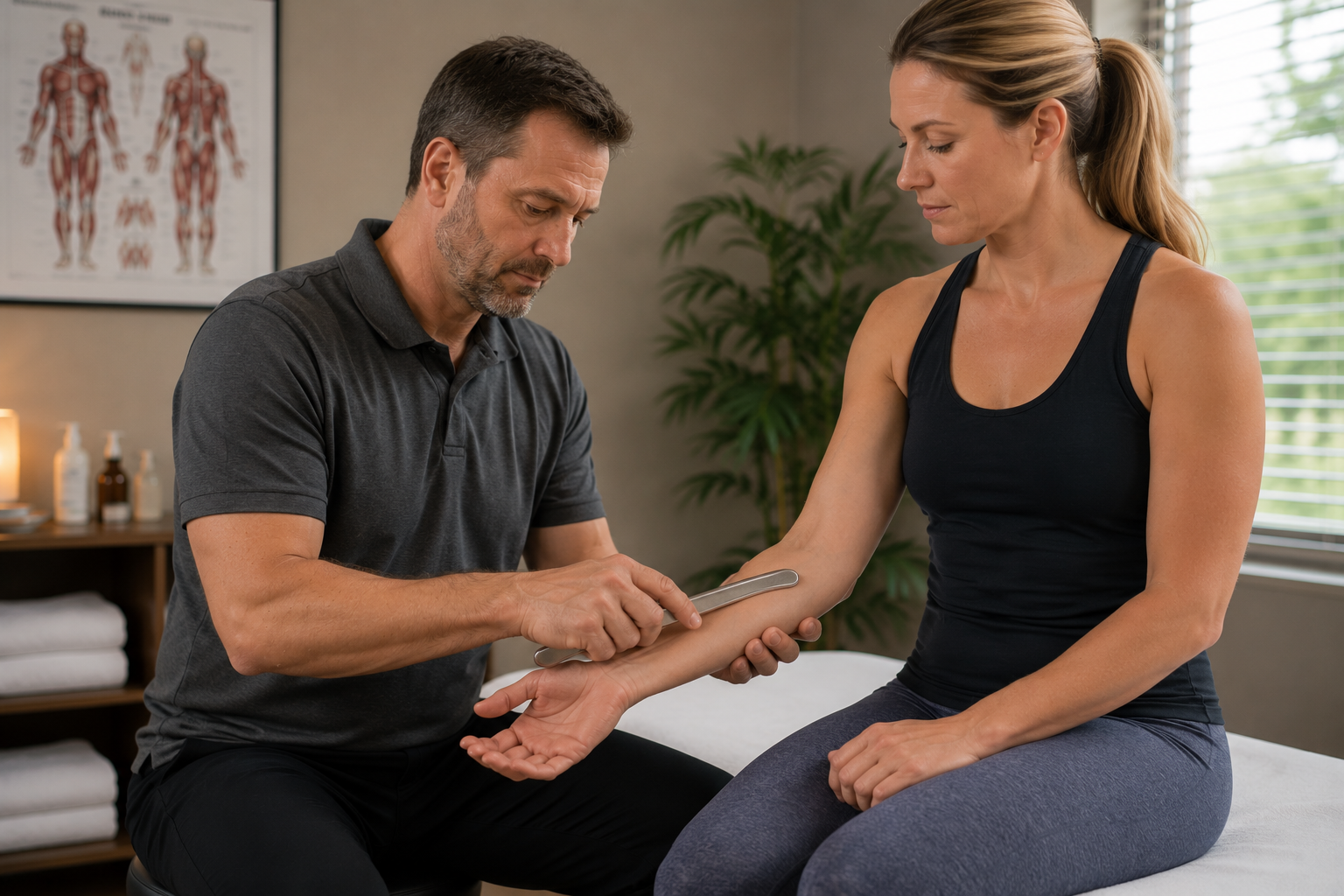
This uses specialised stainless-steel instruments to detect and treat fascial adhesions with greater precision than hands alone can provide.
What You’ll Feel During the Session
People often ask: will it hurt?
Honest answer: it depends on what’s being treated and how much tension has built up.
✔ Trigger point work can feel like an intense ache — uncomfortable, but productive. Most clients describe it as “good pain.”
✔ Deep tissue work on chronically tight areas involves significant pressure. This should always stay within your tolerance.
✔ Myofascial techniques often feel like a slow, stretching sensation rather than direct pressure.
✔ Effleurage and transitional strokes are generally gentle and feel relaxing.
👉 A good therapist will check in regularly throughout the session.
You should always feel comfortable asking for less pressure.
⚠️ Wincing through a session without communicating isn’t necessary — and it’s not more effective.
Tissue responds better when the nervous system feels safe. Speak up, and the treatment improves.
A Real Scenario: A Shepparton Nurse With Neck and Shoulder Pain
Picture someone who works long shifts on their feet.
They spend hours reaching across beds, turning their torso, carrying equipment.
By the end of a week, their right shoulder is noticeably higher than the left.
Their neck rotates less on one side.
There’s a persistent ache between the shoulder blades — and tension headaches are becoming a regular occurrence.
A relaxation massage might ease the surface tension for a day or two.
A remedial session addresses the reason the right shoulder is elevated.
It works through the specific muscles causing the rotation restriction.
It treats the referral pattern driving the interscapular ache — and the neck and upper back tension feeding into those headaches.
The result isn’t just temporary relief.
It’s a measurable change in how the body sits, moves, and functions.
That’s the distinction remedial massage makes.
For anyone in Shepparton who has tried general massage and felt like it only helped temporarily — this is usually why.
After the Session: What to Expect in the Next 24–48 Hours
Post-treatment response varies by person and by what was treated.
✔ Some people feel immediate relief and a sense of physical lightness. ✔ Some feel a mild muscle soreness — similar to post-exercise tenderness — for 24–48 hours. ✔ Some feel deeply fatigued and need rest.
All of these are normal.
The soreness doesn’t mean anything went wrong.
It means the body is processing the changes made to the tissue.
🔹 Drink water after your session. Metabolic waste released from treated tissue clears more efficiently when you’re well hydrated.
🔹 Avoid intense exercise in the 24 hours following a deep remedial session.
🔹 Take note of how you feel over the following days.
Report back to your therapist at your next session — it helps them calibrate the approach and track your progress over time.

How Often Should You Book?
This depends entirely on what you’re treating.
For acute issues — a recent injury or sudden onset pain — more frequent sessions initially will produce faster results.
For chronic tension patterns — the kind built up over months or years of poor posture or sustained stress — regular sessions spaced across weeks allow tissue to progressively change.
For general maintenance and prevention — once every three to four weeks is a reasonable benchmark for most people.
👉 If your schedule makes regular clinic visits difficult, mobile massage Shepparton removes that barrier entirely.
A therapist comes to you. You don’t lose recovery time in transit.
For those who want extended treatment time to work across multiple areas, a two-hour session allows a thorough, unhurried approach from head to lower back.
Is Remedial Massage Right for You?
If any of the following apply — the answer is likely yes.
✔ You have pain that keeps returning despite rest ✔ Your movement or range of motion feels restricted ✔ You’ve been told your posture is poor and it’s causing problems ✔ You’ve tried general massage but the relief doesn’t last ✔ You’re recovering from injury and want to support the process ✔ You sit at a desk for most of your working day ✔ You experience recurring headaches linked to neck or shoulder tension
Remedial massage Shepparton is also highly suitable for people managing disabilities or chronic health conditions where standard exercise-based approaches aren’t accessible.
It meets the body where it is — and works within its current limits.
The Right Treatment Changes More Than How You Feel
Remedial massage isn’t about feeling relaxed for a day.
It’s about changing the physical patterns that are limiting how you live.
Better posture. Less pain. Improved mobility. More energy.
These aren’t side effects. They’re the point.
👉 Explore the full range of treatments at Relaxellent Shepparton — and find out which approach is right for what your body is carrying right now.