Everyone tells you to relax.
You try. You really do.
But the tightness in your neck doesn’t ease. The ache in your shoulders doesn’t lift. The stiffness in your lower back is still there on Monday morning, just like it was on Friday.
You’ve been told it’s stress. Maybe you’ve told yourself the same thing.
But here’s what most people don’t realise — muscle tightness that doesn’t resolve with rest isn’t “just stress” anymore.
It’s become something structural.
And massage Shepparton therapists see this pattern constantly. The person who’s been tight for so long they’ve forgotten what loose feels like.
This blog explains what’s actually happening — and why it matters to act sooner rather than later.
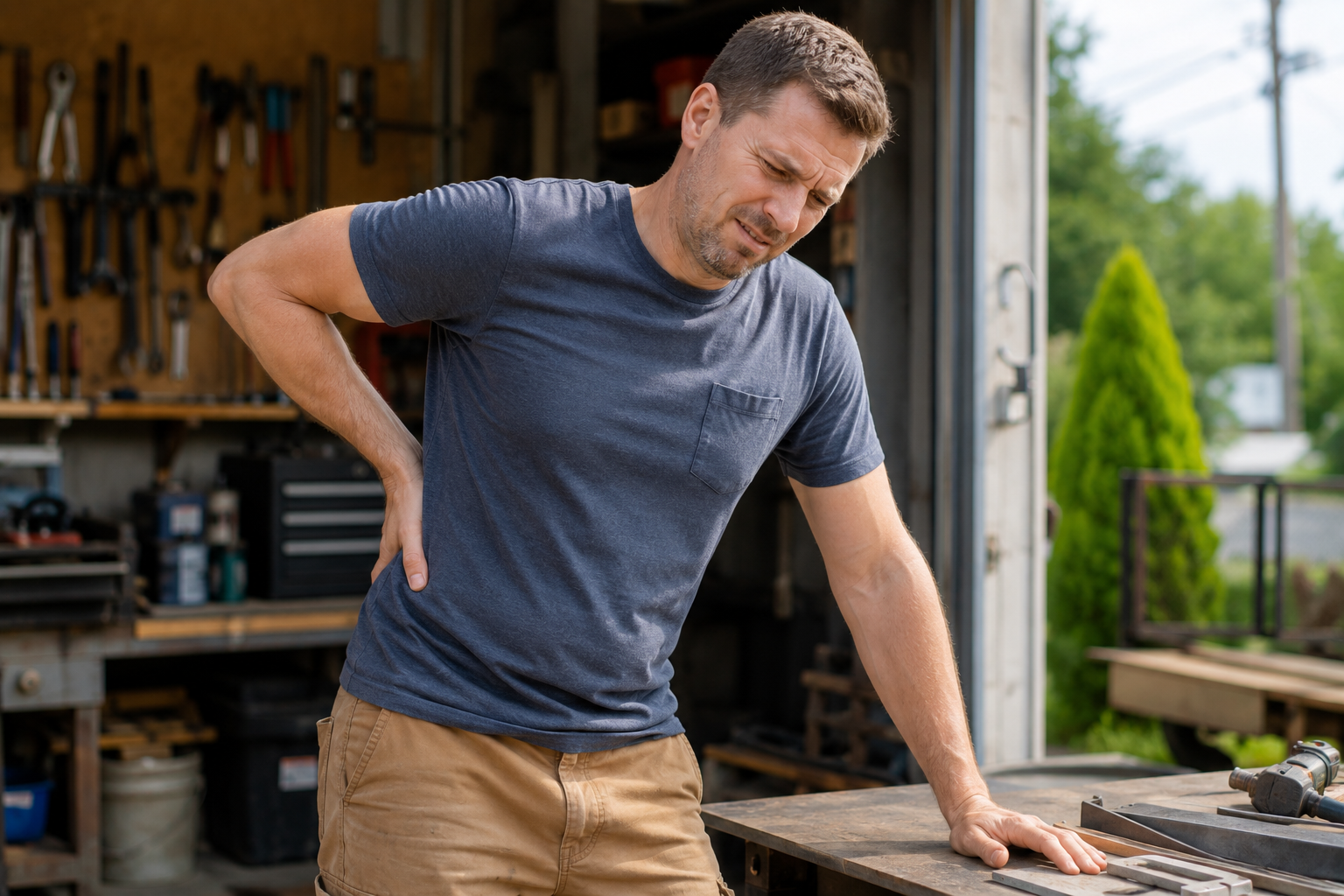
The Moment Tension Stops Being Temporary
Muscle tension begins as a response.
Something stressful happens. Your body braces. Muscles contract to protect and prepare.
In a healthy cycle, the stressor passes — and the muscles release.
But modern life doesn’t offer that release.
The stressors don’t stop. The emails keep coming. The financial pressure doesn’t lift. The sleep doesn’t fully restore.
So the muscles never get the all-clear signal.
They stay contracted. Day after day. Week after week.
👉 At some point — usually around the six to eight week mark — the nervous system stops treating the contraction as temporary.
It begins to treat it as the new normal.
The muscle fibres shorten adaptively. The fascia — the connective tissue surrounding the muscles — begins to thicken and adhere.
Now you don’t just have tense muscles.
You have changed tissue.
And that doesn’t respond to a hot shower or a good night’s sleep.
What Changed Tissue Actually Feels Like
Most people describe this stage as a kind of dull, background heaviness.
It’s not sharp pain. It’s not a sudden injury.
It’s just… always there.
🔹 The neck that never quite moves freely first thing in the morning
🔹 The shoulder that catches when you reach overhead
🔹 The lower back that aches after 20 minutes in any one position
🔹 The sensation of tightness that returns within a day or two of any massage
That last one is important.
If your tension comes back quickly after massage — it means the underlying tissue hasn’t changed yet.
The massage helped temporarily. But the structural holding pattern is still intact.
This is the point where treatment needs to go deeper — and more consistently — to create lasting change.
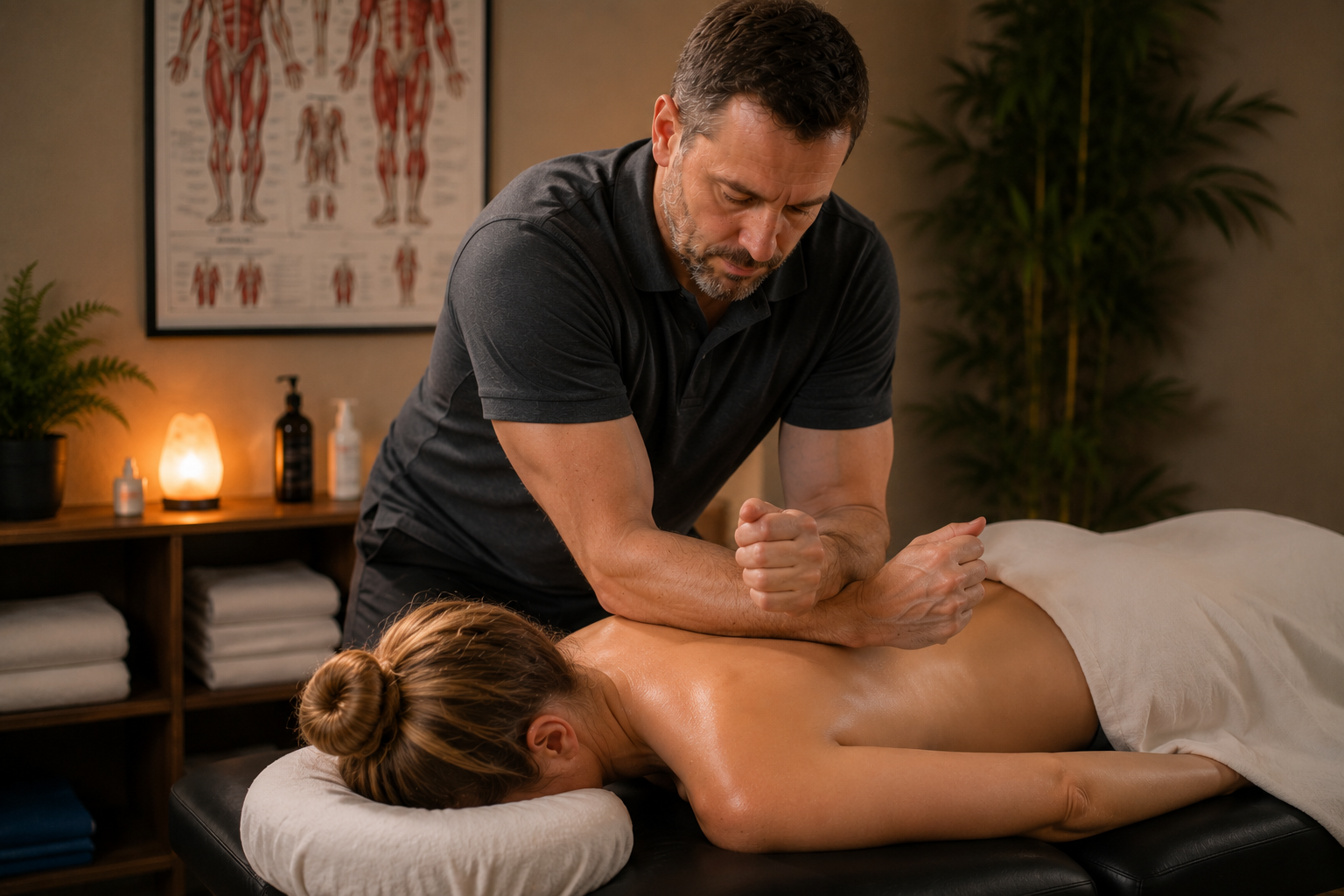
The Role of Trigger Points in Chronic Tightness
Most people have heard the word “knot.”
The clinical term is trigger point — a hyperirritable spot within a taut band of muscle fibre.
Trigger points form when muscle tissue is under sustained load without recovery.
They don’t just cause local pain.
They refer pain — meaning they create sensations in areas away from where the trigger point actually lives.
🔹 A trigger point in the upper trapezius can refer pain up the side of the neck and into the temple — producing what feels like a headache.
🔹 A trigger point in the piriformis (deep gluteal muscle) can refer pain down the back of the leg — mimicking sciatica.
🔹 A trigger point in the suboccipital muscles can create pressure behind the eyes and across the forehead.
⚠️ This is why treating the site of pain alone often doesn’t resolve it.
The source is frequently somewhere else entirely.
Skilled deep tissue massage maps and treats these trigger point patterns systematically — working backward from referred symptoms to their actual origin.
When Fascia Is the Real Problem
Beneath and between every muscle in your body is fascia — a web of connective tissue that provides structure, transmits force, and facilitates movement.
Healthy fascia is pliable. It glides. It allows muscles to move independently.
Chronically stressed and restricted fascia does the opposite.
It thickens. It binds. It adheres to adjacent structures.
And unlike muscle, fascia doesn’t respond quickly to standard massage pressure.
It requires slow, sustained input — the kind that communicates with the tissue rather than forcing through it.
👉 Myofascial techniques and IASTM therapy are specifically designed for this.
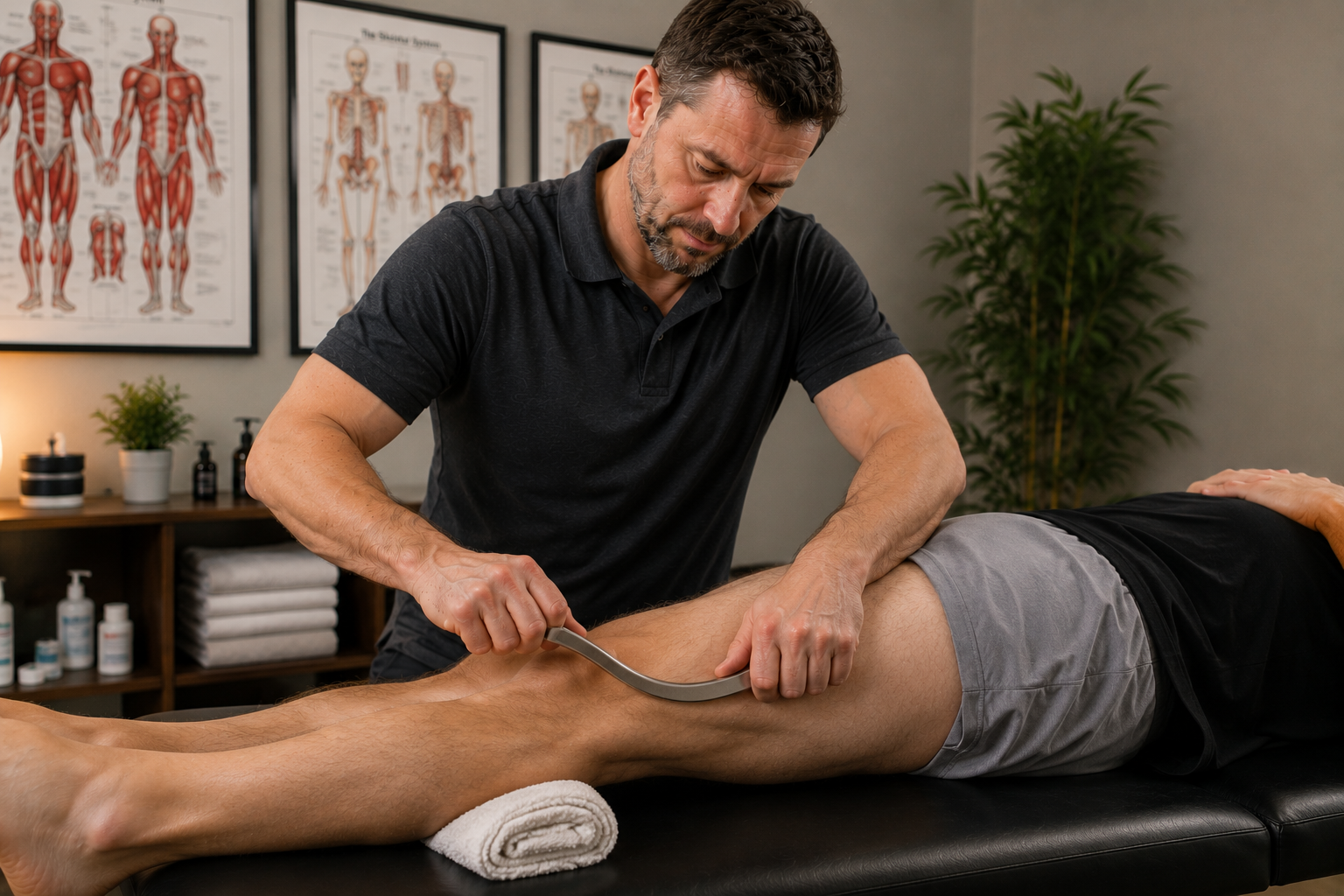
IASTM uses precision instruments to detect and treat fascial restrictions that hands alone often can’t locate clearly.
For people whose tightness has been present for months or years — fascial restriction is almost always part of the picture.
The Nervous System Keeps Score
Here’s the part most people miss entirely.
Chronic muscle tightness isn’t just a tissue problem.
It’s a nervous system problem.
Your brain maintains a map of your body — called the cortical body map.
When muscles are held in chronic tension, the map updates.
The brain begins to treat the tightened, shortened position as the correct resting length.
It stops sending signals to release — because release now feels abnormal.
This is why some people notice that even during massage, their muscles resist letting go.
The tissue is willing. But the nervous system keeps pulling it back.
⚠️ This is also why a single session often isn’t enough to create lasting change in long-term patterns.
The nervous system needs to be retrained — not just the tissue treated.
Lomi Lomi massage addresses this beautifully.
Its long, rhythmic, flowing strokes work across large areas of the body in a way that engages the nervous system differently from targeted clinical work.
Many clients find it creates a quality of release — particularly in chronically held areas — that more localised techniques don’t achieve on their own.
Real Scenario: The Shepparton Tradie With “Just a Tight Back”
Picture a tradesman in his early 40s.
Physical work all week. Weekend sport when he can manage it.
He’s had a “tight back” for about three years.
He stretches occasionally. Takes ibuprofen when it gets bad. Powers through.
He tells himself it’s just part of the job.
But the tightness has spread.
What started in the lower back now pulls across the glutes. The right hip has started catching. He’s noticing referred pain into the back of the right thigh on long drives.
This isn’t just a tight back anymore.
This is a pattern of fascial restriction, trigger point referral, and nervous system holding that has been left to develop unchallenged for three years.
It’s still treatable. But it will take consistent work — not a one-off session — to unwind.
👉 People in Shepparton in similar situations often find that mobile massage makes consistency achievable.
No travel. No planning around clinic hours. The therapist fits around the work week.
And for anyone who wants to address multiple areas properly in one visit — a two-hour session allows the time required for thorough, layered treatment.

Why “Waiting Until It Gets Worse” Is the Worst Strategy
This deserves saying directly.
The longer structural tension is left, the more layers it develops.
Shortened muscles pull on joints. Joints begin to compensate. Compensation patterns create new imbalances.
What started as muscle tightness becomes a multi-layered mechanical problem.
Treatment at that stage is longer, more intensive, and slower to produce results.
Treatment at the early structural stage — when tissue is changed but not yet severely restricted — responds significantly faster.
❌ “It’ll settle on its own.”
Chronically adapted tissue doesn’t self-resolve. It was designed to maintain whatever state it’s in.
❌ “I’ll start stretching.”
Stretching lengthened tissue that’s adhesed to surrounding fascia provides limited benefit. The adhesion needs releasing first.
❌ “I’ll wait until I have more time.”
Every week of delay adds another layer to the pattern.
What Massage Shepparton Can Actually Change
When treatment is matched to the actual problem:
✔ Trigger points are identified and released at their source — not just managed at the site of pain ✔ Fascial adhesions are gradually broken down — restoring glide and movement between structures ✔ The nervous system receives repeated input that the held position is no longer necessary ✔ Circulation returns to areas that have been chronically ischaemic (low blood flow) ✔ Range of motion improves — often noticeably within a few sessions
For people managing tightness that also affects their energy, mood, and sleep — deep relaxation massage works alongside targeted treatment to address the whole-body cost of chronic tension.
And for those whose tightness has an emotional or energetic dimension that purely physical work doesn’t seem to reach — Reiki healing offers a complementary approach that many clients find profoundly settling.
The Line Between “Stress” and “Structure” Has Already Been Crossed
If your tightness has been there for more than a few weeks — it’s no longer just stress.
Your tissue has adapted. Your nervous system has recalibrated. The holding pattern is established.
That’s not a reason to panic.
It’s a reason to act — with treatment matched to what’s actually happening, not just what’s visible on the surface.
Massage Shepparton offers that level of targeted, informed care.
👉 Explore the full range of treatments at Relaxellent Shepparton — and find out what your body has actually been holding onto.